
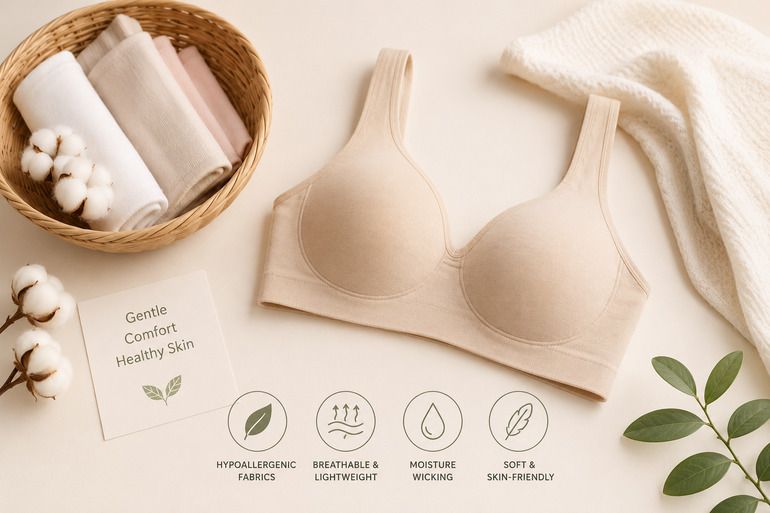
Hypoallergenic Bra Materials: Best Fabrics for Sensitive Skin
Skin irritation from bras is more common than many women think. Tight elastic, rough fabrics, sweat buildup, and chemical dyes can all cause itching, redness, and discomfort.
For women with sensitive skin, eczema, or fabric allergies, choosing the wrong bra material can make everyday wear uncomfortable. The good news is that some fabrics are much gentler on the skin. Soft, breathable, and hypoallergenic materials can help reduce friction, moisture, and irritation throughout the day.
In this guide, you’ll learn which bra materials are best for sensitive skin, which fabrics to avoid, and what features to look for when choosing a comfortable everyday bra.
Why Some Bras Irritate Sensitive Skin?
Many bras are made with synthetic fabrics that trap heat and sweat against the skin. Excessive moisture on the body can irritate the straps and bra band, which may result in itching and redness.
In addition, some women are allergic to dyes, latex, nickel hardware, or chemicals used in the manufacturing process. The Centers for Disease Control and Prevention (CDC) says that contact dermatitis can occur when chemicals, fabrics, metals, and long periods of exposure to moisture affect the skin.
Another significant source of pain is friction. Sensitive areas can be repeatedly rubbed by rough lace or stiff seams and tight underwires, leading to skin becoming sore and inflamed throughout the day.
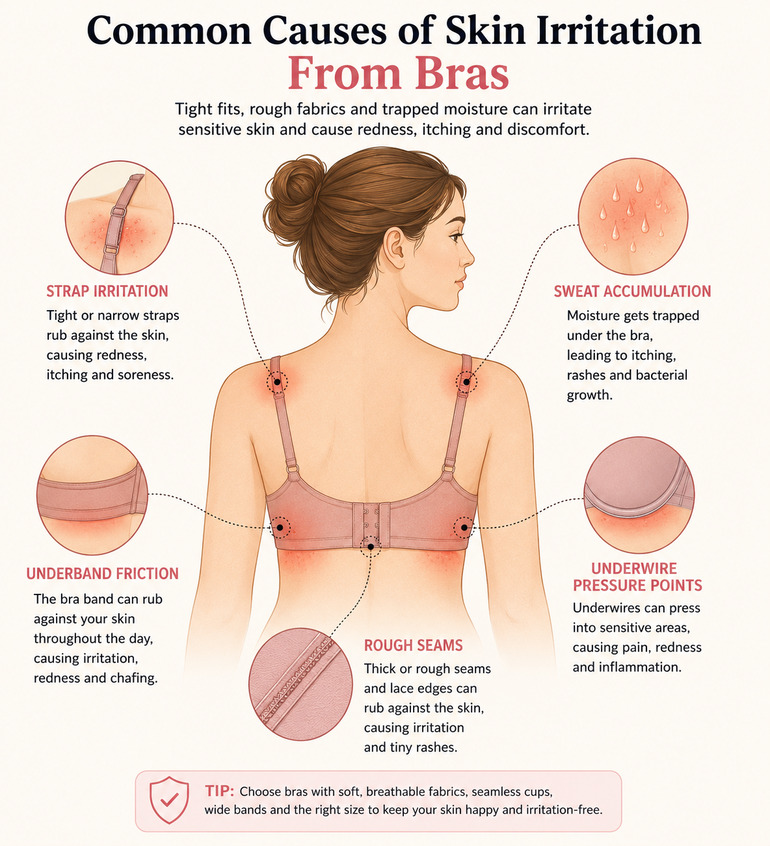
Signs Your Bra Material May Be Causing Skin Problems.
If you notice the redness persists for hours after wearing your bra, you might have a problem with the material. Another common warning sign is persistent itching under the bust or around the straps.
Some women experience a sensation of dryness, small bumps, or burning on their skin after wearing some fabrics. These reactions may be worse in hot weather and if the person is sweating.
In more sensitive cases, the skin can peel, crack, or lead to a flare-up of eczema rash in areas where the bra is in continuous contact with the body.
Best Hypoallergenic Bra Materials for Sensitive Skin.
Before choosing a hypoallergenic bra, it is important to understand that not all “soft” fabrics are truly skin-friendly. Some materials may feel comfortable at first, but still trap heat, moisture, or irritating chemicals against the skin over time.
Below are some of the most recommended bra materials for women dealing with itching, eczema, redness, or skin sensitivity.
1. Organic Cotton.
Organic cotton is one of the best fabrics for sensitive skin because it is soft, breathable, and gentle on irritated areas. Unlike conventional cotton, organic cotton is produced with fewer synthetic chemicals and pesticides, which may help reduce skin irritation for some women.
The lightweight fabric allows better airflow and helps reduce sweat buildup during long hours of wear. This can be especially helpful for women with eczema, heat rashes, or easily irritated skin. Organic cotton also creates less friction against inflamed skin, making everyday wear more comfortable.
According to the United States Department of Agriculture (USDA) Organic Standards, organic farming limits the use of many synthetic pesticides and harsh chemical treatments. Because of this, many women with sensitive skin prefer organic cotton bras for their softer feel and lower chance of irritation.
2. Bamboo Viscose.
Bamboo-based fabrics are known for their soft texture and moisture-wicking ability. They remove moisture from the skin, which makes them beneficial in warm and humid areas.
The lightweight, smooth feel of bamboo against sensitive skin is what many women prefer when it comes to wearing a bamboo bra. But the better the fabric is, the better it would be. Cheaper blends could also have irritating synthetic fibers.
According to The National Eczema Society, soft clothing and breathable fabrics may help reduce overheating and irritation for people with eczema-prone skin. This is one reason why lightweight bamboo fabrics are often considered more comfortable for daily wear.
3. TENCEL™ Lyocell.
TENCEL™ Lyocell is a soft fabric made from wood pulp fibers. It is highly breathable and feels very smooth against the skin, which helps reduce friction that can cause irritation in sensitive areas.
This type of fabric also has a reputation for moisture control, which keeps the body cool during the day. Women who have sensitive skin are drawn to TENCEL™ because it is softer and lighter than polyester blends.
4. Modal Fabric.
Modal is a soft, plant-based fabric that is commonly used in comfort bras. It is naturally stretchy and gentle, so it does not feel tight or rough on sensitive skin.
Modal bras are lightweight and breathable, making them comfortable for all-day wear. The fabric also moves easily with the body, which helps reduce pressure and friction on irritated areas.
Because of its softness and flexibility, modal is often used in wireless bra designs for women who want a balance of comfort and light support.
5. Silk-Lined Bras.
Silk-lined bras are a good choice for women with very sensitive or post-surgery skin. It causes very little friction and is smooth on delicate areas, like the eyes.
Typically, silk bras cost more, but they can help prevent irritation from rough seams or textured fabrics.
Materials to Avoid if You Have Sensitive Skin.
Not all bra materials are suitable for sensitive skin, even if they look smooth or feel stretchable. Some synthetic fabrics can actually increase irritation by trapping heat, sweat, and bacteria against the skin for long periods.
Polyester.
Polyester retains heat and sweat better than natural fibres. This may facilitate rubbing and irritation that will make it itchier and itch worse during prolonged usage.
Synthetic fabrics like polyester may worsen skin irritation in people with sensitive skin or eczema, especially when moisture and heat are trapped close to the body.
Cheap Nylon Blends.
Nylon is not necessarily bad, but bad-quality nylon products may be rough and not breathable. Some women find that there is irritation arising from rubbing and retaining moisture.
Synthetic blends are also less breathable than natural fibers, which means they retain sweat longer on the skin.
Latex Elastic.
Latex is a common allergen. Some women with latex sensitivity may experience redness, itching, or swelling around the bands and straps of a bra.
For those who are allergic, using latex-free bras can drastically minimise these reactions.
Heavy Lace and Rough Seams.
Smooth fabrics can irritate skin over and over with rough decorations that are pleasing to the eye. The tight seams can also cause pressure points and irritation.
Women tend to be safer wearing seamless or lightly lined bras when they have itching or inflammation.
Ideal Bra Styles for Different Sensitive Skin Needs.
Different skin conditions require slightly different bra choices because sensitivity varies from person to person. What works for mild irritation may not be suitable for eczema flare-ups or heat-related rashes.
For Eczema-Prone Skin.
Soft organic cotton bras are often the best choice because they have seamless cups. Wireless styles are loose-fitting and minimize friction on irritated skin.
If your skin flares easily, avoid stiff elastic, heavy lace, or heavily padded bras.
For Sweating and Heat Rash.
Bamboo and TENCEL™ Bras are effective because they absorb the moisture away from the skin. In hot weather, lightweight fabrics will help keep the chest area cooler.
The breathable mesh panels can also enhance air circulation during the day.
For Post-Surgery Sensitivity.
Soft-braided front closure bras can be more comfortable to wear after surgery. Soft materials reduce irritation in the area where the skin is healing.
There are many recovery bras that are created with no underwires for added convenience.
For Everyday Comfort.
Wireless cotton modal type of fabrics are commonly used for daily wear, as the fabric exhibits a combination of softness, flexibility, and support.
The wide straps and smooth bands also enhance comfort during long wearing time.
How to Wash Bras for Sensitive Skin?
Sometimes, even the best bra fabric causes skin irritation when washed with harsh detergents. Products used for laundry often contain strong fragrances and can leave a residue that irritates and itches.
Specialists in dermatology advise using detergents without fragrance and without dyes, which are suitable for sensitive skin.
Also, it is great to wash new bras before using them for the first time. This will help to eliminate any residual chemicals, dyes, and manufacturing pollutants from the fabric.
Air-drying bras rather than drying them with high temperatures can contribute to maintaining their softness and elasticity for the long haul.
The Bottom Line.
The type of bra material can be a big difference for women with sensitive skin. Fabrics such as organic cotton, bamboo viscose, and TENCEL™ are breathable and help to minimise irritation by controlling moisture and friction.
Concurrently, leather with no rough seams, excess synthetic textiles, or latex can help avoid any itching or redness that might occur through everyday use. Wireless technology, uninterrupted fabrication, and tag-less designs are all small but significant features that contribute to long-term comfort.
When looking for hypoallergenic bras, the quality of the material is more important than its look. A skin-friendly and soft bra will help keep your sensitive skin cooler, calmer, and more comfortable all day.
FAQs
What fabric is best for sensitive skin bras?
Organic cotton is considered the best fabric available for sensitive skin, as it is breathable, soft, and gentle on an irritated surface.
Can bras cause allergic reactions?
Yes. Many women are sensitive to latex, dyes, nickel hardware, or synthetic fabrics that cling to their skin and retain sweat and heat.
Are wireless bras better for sensitive skin?
Wireless bras may be more comfortable as they take pressure and friction away from sensitive areas.
Is bamboo fabric good for eczema?
Bamboo fabric could be helpful as it is soft and absorbs moisture well. But the quality of fabric remains an important factor.
Why does my bra make me itch?
Itching can occur due to trapped sweat, abrasiveness of the fabric, allergies, tight-fitting fabric, or chemical reactions in the fabric.
Related Posts
Strapless Bras: How They Stay Up (Complete Guide)
Strapless bras are often seen as tricky, either they stay perfectly in
How to Choose the Right Sports Bra for an Athletic Body Type
Let’s be honest, most sports bras are not made with athletic bodies
Minimizer vs Support Bra: Which Is Better for a Fuller Bust?
Choosing the right bra becomes more important when you have a fuller b
Signs Your Bra Is Too Tight and Causing Skin Irritation
Bras are designed to provide support and comfort throughout the day. H
Best Breathable Bra Fabrics for Hot Weather and All-Day Comfort
Hot weather may turn even your favorite bra into a source of discomfor
Find Your Ideal Bra by Understanding Your Breast Shape
For many people, finding a bra that truly fits can feel frustrating. Y
POST COMMENT