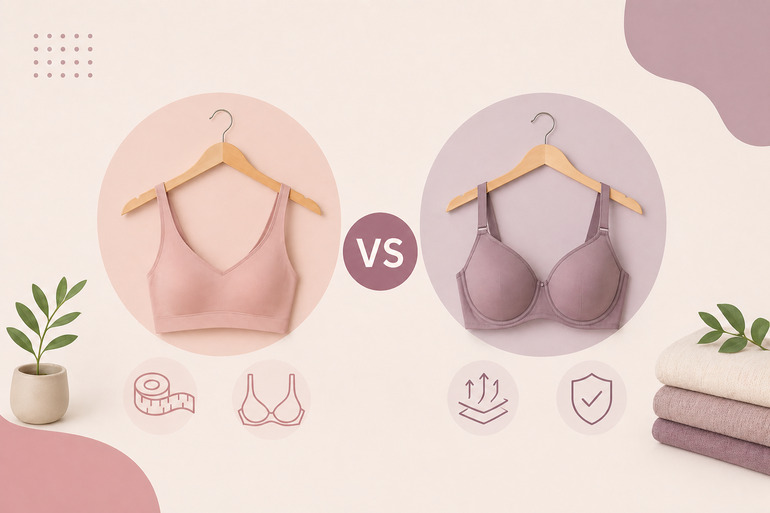
Petite vs Plus Size: Finding the Right Bra Support Level
Finding the right bra shouldn’t feel like a daily struggle, but for many women, it does. You try different sizes, styles, and brands, yet something still feels off. Either there’s no support, or it feels uncomfortable after a few hours.
The truth is, bra support isn’t one-size-fits-all. What works for a petite frame won’t work the same for a fuller body.
In this guide, we will break down the difference between petite and plus-size bra support, and exactly how to choose the right support level for your body.
Petite vs Plus Size Bra Support: Key Differences.
| Body Factor | Petite Women | Plus Size Women |
| Frame Size | Small, narrow structure | Broad, wider frame |
| Breast Weight | Light to moderate | Moderate to heavy |
| Support Focus | Fit precision and balance | Lift and weight distribution |
| Strap Role | Minor support role | Major support role |
| Band Importance | Moderate importance | Extremely important (main support) |
| Common Issues | Loose fit, slipping straps | Back pain, lack of lift |
| Best Styles | Demi, t-shirt bras, light support | Full coverage, underwire bras |
Why Bra Support Needs to Differ by Body Type?
Before choosing a bra, it’s important to understand why support needs change with body type. This is about structure, weight, and balance.
Petite and plus-size bodies carry weight differently, which directly affects how a bra should function.
Support Needs for Petite Women.
Petite women usually have smaller frames with narrower shoulders and shorter torsos. Even if the bust is fuller, the overall structure is lighter.
Because of this, heavy-duty support isn’t always necessary. Instead, the focus is on getting a precise fit that stays in place without extra bulk.
Support Needs for Plus-Size Women.
Plus-size women typically have more breast volume, which adds weight and pressure on the upper body. This changes how support should be designed.
Here, bras need to do more than fit, they need to lift, stabilize, and distribute weight evenly to reduce strain.
Best Bra Support for Petite Women.
When choosing the best bra support for petite women, the goal is comfort without unnecessary bulk.
You want something that fits your proportions perfectly, rather than something overly structured.
Key features to look for:
- Narrow straps that don’t slip
- Smaller band sizes with a firm grip
- Lightly padded or molded cups
- Adjustable straps with a shorter range
These features help maintain support without overwhelming your frame.
Best Bra Support for Plus Size Support and Lift.
For plus-size women, support needs to be stronger and more structured. Comfort comes from proper lift, not from loosening the bra.
The best bras for plus-size support and lift focus on holding weight securely while reducing pressure points.
Key features to look for:
- Wide, cushioned straps
- Strong underwire for lift
- Full-coverage cups
- Thick, firm bands
These features work together to distribute weight evenly across your body.
How to Choose Bra Support for Your Body Type?
If you follow a simple step-by-step method, you can easily find what works for your body.
Here’s a detailed approach you can use every time:
Step 1: Check Your Band Fit.
The band is the foundation of your bra support. It should sit straight across your back and feel snug without digging into your skin.
If the band rides up or feels loose, it means it’s too big. A proper band should stay in place even when you move your arms.
Step 2: Evaluate Cup Fit.
Your cups should fully hold your breast tissue without any spilling or gaps. If you notice bulging, the cup is too small. If there’s space at the top, it’s too big.
A well-fitted cup provides a natural shape and reduces the need for constant adjustment.
Step 3: Adjust the Straps Correctly.
Straps are there to support, not to carry all the weight. They should sit comfortably on your shoulders without digging in or slipping off.
If your straps keep falling, it could mean the band is too loose, or the bra isn’t designed for your frame.
Step 4: Test Movement and Stability.
Always move around when trying on a bra. Raise your arms, bend forward slightly, and twist your body.
A good bra will stay in place and feel secure during movement. If it shifts, it’s not the right fit.
Step 5: Match Support Level to Your Body Type.
Petite women should focus on lightweight, well-fitted bras. Plus-size women should prioritize structured support and lift.
This final step ensures you’re not just wearing a bra, but wearing the right kind of support for your body.
Common Bra Support Problems (Petite vs Plus Size).
Many women experience similar bra issues, but the reasons behind them differ. Understanding this helps you fix the problem quickly.
Petite women often face:
- Loose bands
- Slipping straps
- Oversized cups
Plus-size women often face:
- Shoulder pain
- Lack of lift
- Tight or digging bands
Simple fixes:
- Petite: focus on smaller band sizes and proper strap adjustment
- Plus size: choose bras with strong bands and wider straps
The Bottom Line.
At the end of the day, the right bra should feel comfortable, supportive, and natural.
Understanding petite vs. plus-size bra support helps you make smarter choices instead of guessing your way through sizing and styles.
Remember:
- Petite bodies need an accurate fit and proportion
- Plus-size bodies need strong support and lift
If you follow the right steps and understand your body, finding the perfect bra becomes much easier and far less frustrating.
Related Posts
How Often Should You Replace a Bra? Signs It’s Time for a New One
Most women keep a bra far longer than they should. You love the fit, t
Front vs. Back Closure Bras: The Best Choice for Comfort, Fit, and Support
Choosing a bra is not only about style. The closure type can affect co
Sports Bra Impact Levels Explained: Low, Medium & High Support Guide
Ready for a great workout, but within minutes you’re fixing straps,
Asymmetrical Breasts Solutions: How to Fix Uneven Breasts
Asymmetrical breasts means that one breast differs from the other in s
Find Your Ideal Bra by Understanding Your Breast Shape
For many people, finding a bra that truly fits can feel frustrating. Y
T-Shirt Bras Guide: Fit, Benefits & Everyday Comfort Tips
You put on your favorite top, and suddenly your bra lines show through
POST COMMENT