The Role of Elastane in Bras: Why Stretch Matters for Fit and Support
Most people judge a bra by its design, padding, or brand, but rarely by how the fabric behaves when worn. Yet, two bras that look identical can feel noticeably different after just a few hours.
That difference often comes down to one small but powerful component: elastane. Here, we’ll break down the role of elastane in bras and its benefits and explain why stretch is a key factor behind consistent fit and reliable support.
What Does Elastane Do in Bras?
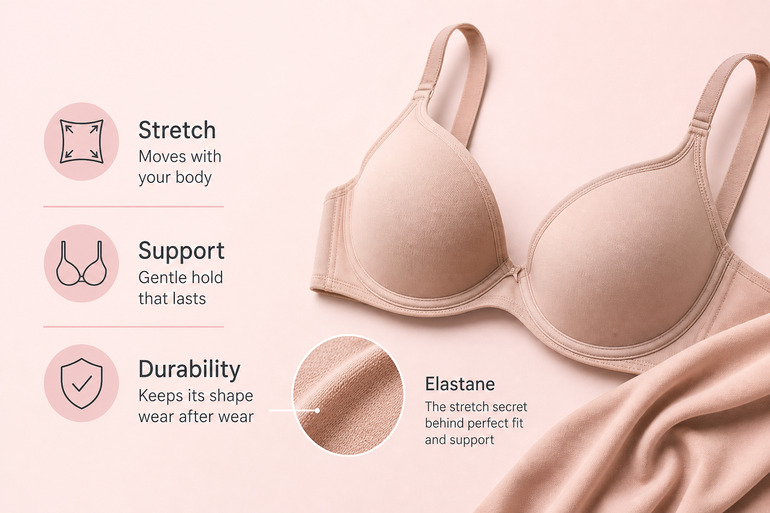
Elastane is a stretch fiber that allows fabric to expand and return to its original shape. In bras, it is used in small amounts but has a big impact on performance.
In daily use, elastane helps to:
- Adjust the bra as your body moves
- Maintain tension in the band and straps
- Prevent sagging over time
- Improve flexibility without losing shape
Without elastane, bras would feel stiff and lose their fit quickly.
Elastane in Bras Benefits: Why It Matters.
When elastane is used correctly, it improves how the bra behaves throughout the day. This is why even a small percentage can make a big difference.
Better Fit That Adapts to Your Body.
Your body is not the same all day. It changes with movement, posture, and even slight swelling. A rigid fabric cannot adjust to these changes, which causes discomfort.
Elastane solves this by allowing slight flexibility in the fabric.
Result:
- Less cup gaping
- Reduced tightness
- More natural fit
Improved Support Without Stiffness.
Support is often misunderstood as tightness. In reality, good support comes from controlled tension, not rigid fabric. This is where elastane helps.
It creates a gentle stretch that holds the bust in place without making the bra feel hard.
Why this matters:
- Band stays firm but flexible
- Support feels stable, not restrictive
All-Day Comfort.
Comfort issues usually come from pressure points. When fabric does not move with your body, it creates irritation over time.
Elastane allows small adjustments in the fabric, reducing stress on the skin.
You’ll notice:
- Fewer red marks
- Less irritation
- Minimal need for adjustment
Shape Retention Over Time.
One common issue with bras is that they lose shape after washing or repeated use. This happens when the fabric cannot recover after stretching. It also affects breast shape.
Elastane helps the bra return to its original structure.
This means:
- Cups stay smooth
- Band remains supportive
- Bra keeps its fit longer
How Elastane Improves Bra Fit and Support?
| Bra Part | Role of Elastane | Result |
| Band | Maintains firm stretch | Main source of support |
| Straps | Retains elasticity | Prevents slipping |
| Cups | Adds flexibility | Reduces gaps |
| Side panels | Controls stretch | Improves stability |
Elastane vs Spandex in Bras: What’s the Real Difference?
Many buyers get confused when they see different names on labels. It creates the impression that they are different materials, but that’s not actually true.
The difference is mainly about naming, not performance.
Are Elastane and Spandex the Same?
Yes, both terms refer to the same fiber. The difference comes from regional usage.
- Spandex: used in the US
- Elastane: used internationally
So functionally, there is no difference.
What About Lycra?
Sometimes you may also see the term Lycra. This adds another layer of confusion for buyers. Lycra is simply a branded version of elastane, often associated with consistent quality.
Key point: All three behave the same in terms of stretch.
Quick Comparison Table.
| Term | Meaning | Performance |
| Elastane | Generic name | Same |
| Spandex | US term | Same |
| Lycra | Branded elastane | Same |
Best Bra Fabric for Stretch and Comfort.
Elastane alone cannot define comfort. The fabric it is blended with plays an equally important role. This is why two bras with the same elastane percentage can feel different.
| Fabric Blend | Best For | Feel |
| Nylon + Elastane | Daily wear | Smooth & supportive |
| Cotton + Elastane | Sensitive skin | Soft & breathable |
| Polyester + Elastane | Active use | Light & moisture-wicking |
How Much Elastane Should a Good Bra Have?
Not all bras use the same amount of elastane. The percentage directly affects how the bra feels and performs.
Knowing the right range helps you avoid bras that are too stiff or too loose.
| Elastane % | Effect |
| 5–10% | Firm, less stretch |
| 10–15% | Balanced (ideal) |
| 15–20% | Very flexible |
Expert recommendation: For most people, 10–15% elastane works best.
Do Bras with Elastane Last Longer?
Durability is another common concern. Many people assume stretch fabrics wear out faster, but that’s only partly true.
The lifespan depends more on care than the material itself.
Factors affecting durability:
- Heat exposure
- Washing method
- Frequency of use
Care tips:
- Wash in cold water
- Avoid dryers
- Air dry only
According to the American Cleaning Institute, high heat during washing and drying can damage fabrics and reduce their ability to maintain shape over time.
The Bottom Line.
The takeaway is simple. Elastane controls how the bra fits, supports, and feels over time.
The main benefits of elastane in bras include:
- Better fit that adapts to your body
- Support without stiffness
- Improved comfort
- Longer-lasting shape
When buying a bra, always check the fabric label. A balanced elastane blend (around 10–15%) can make a bigger difference than design or style alone.
Related Posts
Breast Density & Bra Support: How Tissue Type Affects Fit and Comfort
Breast support is not just about size, it’s also about tissue type.
Signs Your Bra Is Too Tight and Causing Skin Irritation
Bras are designed to provide support and comfort throughout the day. H
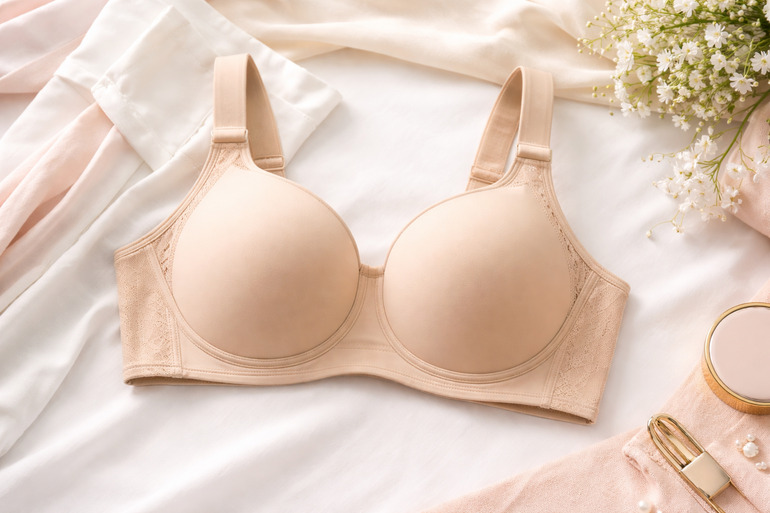
What Is a Minimizer Bra and How Does It Work? (Complete Guide 2026)
For many individuals with a larger bust, standard bras may not always
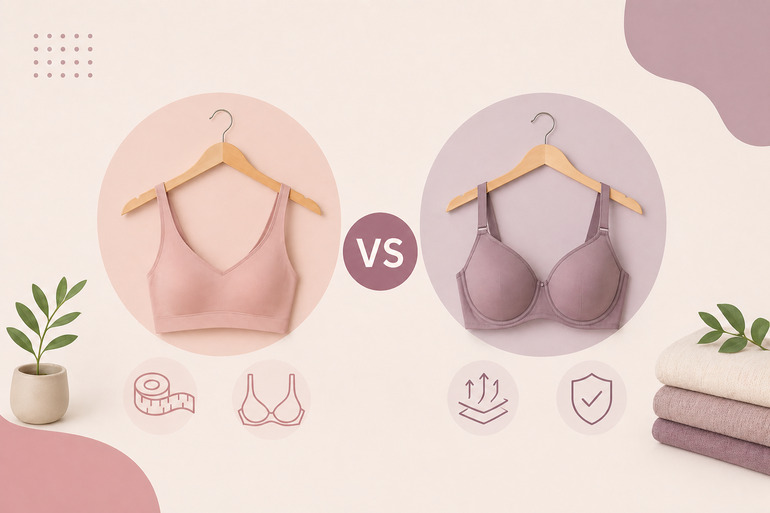
Petite vs Plus Size: Finding the Right Bra Support Level
Finding the right bra shouldn’t feel like a daily struggle, but for
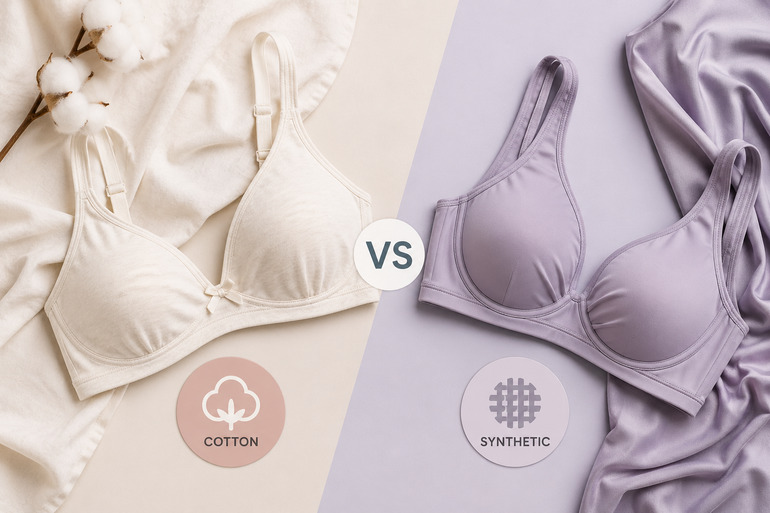
Cotton vs Synthetic Bras: Which Fabric Is More Comfortable for Everyday Wear?
A bra may fit perfectly and still feel uncomfortable after a few hours
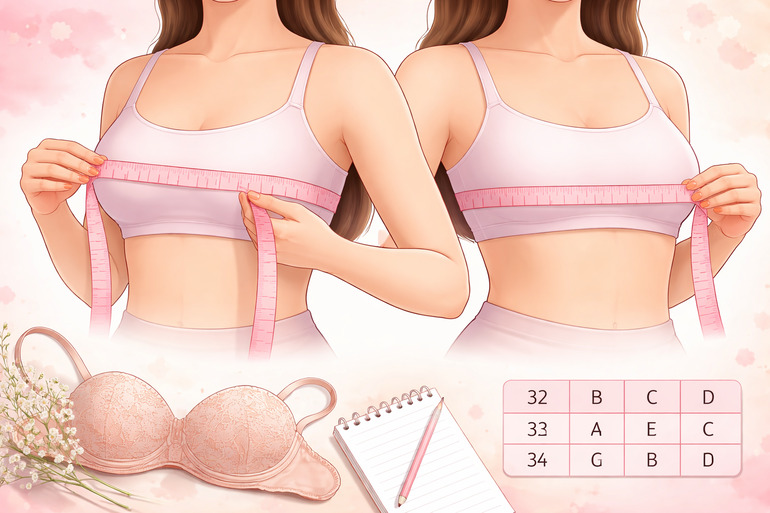
Bust Measurement vs Bra Measurement: Key Differences Explained (Fit Guide)
Finding the right fit starts with understanding your body, but when it
POST COMMENT