Bras and Posture: What’s the Real Link?
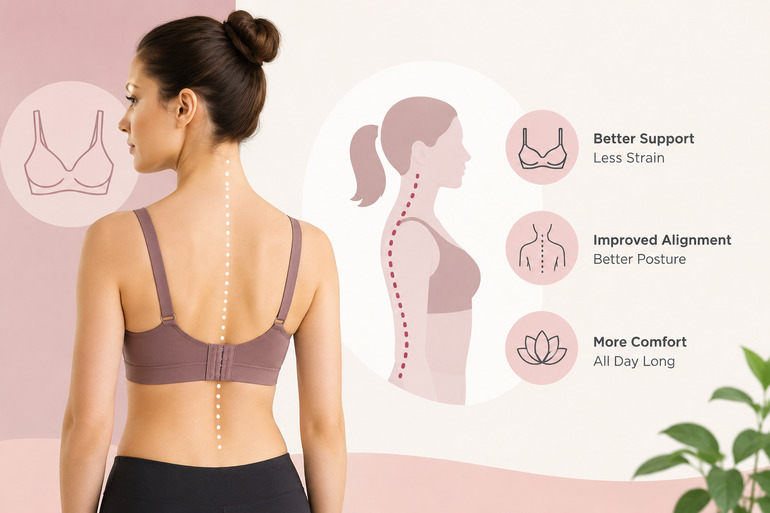
Do you experience tension, stiffness, or pain in your upper back, neck, or shoulders after wearing a bra for a full day? The issue is not only uncomfortable, but it may also impact posture for many women.
The link between bras and posture has gained increasing attention in women’s health, particularly among women seeking more support, comfort, and relief from back pain.
Some women have also been seen to suffer from muscle fatigue, shoulder strain, and upper back pain due to an inadequate and improperly fitting bra, particularly for bigger bust sizes.
In this article, we’ll explore how bras affect posture, signs your bra may be causing discomfort, and what features can provide better everyday support.
Can Bras Really Affect Your Posture?
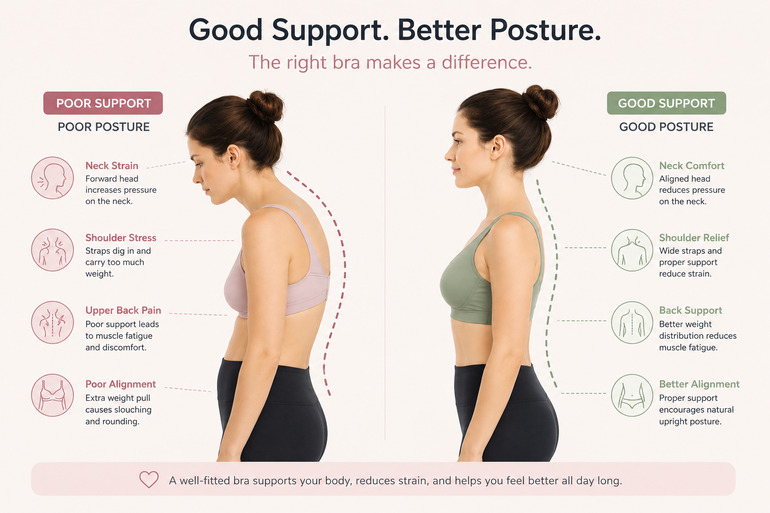
Yes, particularly for women with medium to large bust sizes and those who spend long hours sitting at a desk. If the weight of the breast is not supported correctly, the body will react by pulling the shoulders forward and pressing the neck and upper spine too far.
These subtle changes in posture over time can lead to muscle fatigue and muscle discomfort.
Research published in the journal Gait & Posture found that improved breast support in posture bras helped reduce scapular elevation and improve shoulder positioning compared to standard bras. The study also suggested that supportive bras may help reduce some of the mechanical strain associated with poor posture.
This doesn’t imply that the correct posture is necessarily good as long as the bra lasts. Rather, supportive bra types can help to take away the mechanical stress that worsens poor posture.
How Breast Weight Impacts the Spine and Shoulders.
The spine is continually under tension to balance weight. If there is an excess in breast weight, the upper body may be slightly bent forward, particularly when standing, walking, or sitting for long.
According to a study published in the Journal of Aesthetic Plastic Surgery, some women have a negative perception of their spine’s position and musculoskeletal pain because of their breast size.
It is well noted that poor bra fit and breast size have a relationship with breast pain in the upper back of young women.
This is why many women experience:
- shoulder grooves from straps
- tension headaches
- upper back soreness
- neck stiffness
- posture fatigue after long wear
The problem often becomes worse when the bra’s support relies mostly on thin straps instead of a properly fitted band.
How Supportive Bras May Help Reduce Back Strain.
A well-designed bra helps distribute breast weight across the torso instead of concentrating pressure on the shoulders.
Posture research published in Applied Ergonomics reported that posture changes immediately occurred after the improvement of breast fit in women with larger breasts, as a result of biomechanical effects on breast support and spinal posture.
A supportive bra may come in handy here to assist in controlling the movement of the breast(s) and in balancing the weight on either side of the body. This helps to reduce the strain on the shoulder and prevent upper back muscle fatigue during exercise and/or prolonged periods throughout the day.
Poor support will be more apparent when exercising, sitting at a desk, walking, or during extended periods of standing when the upper body is stressed more. However, experts also note that bras alone are not a substitute for:
- posture exercises
- core strength
- ergonomic seating
- physical therapy when needed
Signs Your Bra May Be Hurting Your Posture.
A lot of women wear the wrong bra size, and they don’t realize it. Bra can be a problem if it causes any of these issues:
Shoulder Straps Digging Into Skin.
If you have deep strap marks, it could be that your bra straps are wearing too heavily. The majority of the support should be provided by the band and not the shoulders, in a supportive bra.
Upper Back or Neck Pain.
If the breast is not supported well, additional tension may be placed on the muscles of the upper back and neck. This can cause pain, stiffness, or back fatigue after extended use.
Constant Shoulder Rolling.
If you are regularly hunching your shoulders forward for relief, the bra may not be providing you with the right amount of support for your chest. In the long run, this can lead to slouching.
Band Riding Up.
A band that rides up usually means the fit is too loose. This reduces support and shifts more pressure onto the shoulders and upper back.
Breast Spillage or Cup Gaping.
Spillage or gaps in the cups are common signs of the wrong cup size. Incorrect sizing can affect weight distribution and overall comfort.
Slouching During Long Wear.
If you start slouching later in the day, inadequate support may be causing muscle fatigue. A well-fitted bra can help reduce strain and improve comfort.
Features That Make a Bra Better for Posture Support.
Since support depends heavily on design and structure, certain bra features play a key role in reducing pressure and improving comfort. Not every supportive bra needs to be labeled a “posture bra.” Often, proper fit matters more than marketing.
- Wide Straps: Wider straps distribute pressure more evenly across the shoulders and reduce digging.
- Strong Supportive Band: Most bra support should come from the band, not the straps. A secure band helps stabilize breast weight across the ribcage.
- Full-Coverage Cups: Fuller cups reduce shifting and improve support during movement.
- Racerback Designs: Racerback bras may help keep straps from slipping while promoting a more centered upper-body position.
- Structured Side Support: Side panels can help distribute breast tissue more evenly and reduce forward pull.
Can Wearing the Wrong Bra Make Posture Worse Over Time?”
Yes, if not properly fitted, supportive, or worn for long periods of time, it can put a strain on the upper body over time. If the weight is not distributed evenly over the bra, it’s probably that the shoulder and neck muscles are bearing the weight, which equals fatigue.The repetitive stress can develop a hunch or slouched shoulders over time, which can cause discomfort and pain, particularly when sitting for long periods or exercising. That’s why fit is more significant than style or design.
Do Posture-Correcting Bras Actually Work?
Posture bras can help some women, but expectations should stay realistic. Most posture bras use:
- reinforced back panels
- compression zones
- cross-back structures
- tension fabrics
These features encourage shoulder retraction and upper-body awareness. Still, posture bras are not medical cures. They may:
- improve posture awareness
- reduce strain temporarily
- support upper-back alignment
But they cannot permanently correct structural posture problems without strengthening exercises, mobility work, posture habits, and ergonomic improvements
Common Myths About Bras and Posture.
Myth: Bras Permanently Fix Posture
Reality: Bras are only going to help with alignment, but not with a retrained posture.
Myth: Tight Bras Provide Better Support
Reality: As the bra becomes too tight, it can create discomfort, pressure, and tension in the muscles.
Myth: Only Large-Bust Women Need Supportive Bras
Reality: A poor fit for the bra can impact comfort and posture at all sizes.
Myth: Expensive Bras Automatically Fit Better
Reality: Size and shape are more important than colour.
How to Find the Right Bra for Better Support.
When looking for the best bra to support posture, it is crucial to keep in mind that there are important factors beyond trends and labels that contribute to the comfort and fit of the bra.
Even the most expensive bra can be uncomfortable if it is not the proper size. It is important to be sensitive to fit details to enhance support, minimise strain, and make everyday wearing more comfortable.
Get Professionally Measured.
Bra sizes change over time due to:
- weight changes
- pregnancy
- hormones
- aging
Focus on Band Fit First.
The band should sit level around the ribcage without riding upward.
Adjust Straps Properly.
Straps should support gently without carrying most of the breast weight.
Move Around During Fitting.
Walk, stretch, and sit down while trying on bras to test real-life comfort.
Replace Old Bras.
Elastic support weakens over time, reducing stability and posture support.
How to Know If Your Bra Is Affecting Your Posture.
- Do your shoulders feel tired after wearing a bra?
- Do straps dig into your skin daily?
- Do you often slouch without realizing it?
- Do you feel neck or upper back tension by the end of the day?
If your answer is yes to more than one, your bra fit or support level may be affecting your posture and comfort.
When Back or Shoulder Pain Needs Medical Attention.
Not all posture discomfort comes from bras alone. Persistent pain may require evaluation if you experience:
- Numbness
- Tingling
- Severe neck pain
- Chronic headaches
- Sharp spinal pain
- Pain lasting several weeks
The National Institute of Arthritis and Musculoskeletal and Skin Diseases notes that many factors contribute to back pain, including posture, muscle weakness, work habits, and spinal conditions.
A supportive bra can help reduce strain, but ongoing pain should not be ignored.
The Bottom Line.
Bras and posture are connected more than many people realize, especially when poor fit, breast weight, and long daily wear are involved. The extra support of the body can put additional pressure on the shoulders, neck, and upper back, sometimes leading to changes in the person’s posture and comfort.
The right bra can help to alleviate upper-body pressure, enhance comfort, and offer improved alignment throughout the day. Supportive bands, cup shape, and wider straps can make a difference to the feel of support for the body in their daily routine.
But it’s not just about the bra when it comes to posture health. There are also components of muscle strength, movement habits, ergonomics, and body mechanics. Rather than search for a “miracle posture bra,” it is better to concentrate on supportive and properly fitted bras to wear over time.
Related Posts
Cotton vs Synthetic Bras: Which Fabric Is More Comfortable for Everyday Wear?
A bra may fit perfectly and still feel uncomfortable after a few hours
Understanding Band and Cup Sizes
Choosing the right bra size can feel confusing. Many people see number
What Causes Breast Sagging? How Proper Support Helps During Workouts
Breast sagging is something most women notice at some point, and it ca
Breast Density & Bra Support: How Tissue Type Affects Fit and Comfort
Breast support is not just about size, it’s also about tissue type.
Small vs Large Bust Support Needs: Tips for Comfort and Proper Fit
Understanding how bust size affects support needs is important for com

T-Shirt Bras Guide: Fit, Benefits & Everyday Comfort Tips
You put on your favorite top, and suddenly your bra lines show through
POST COMMENT