
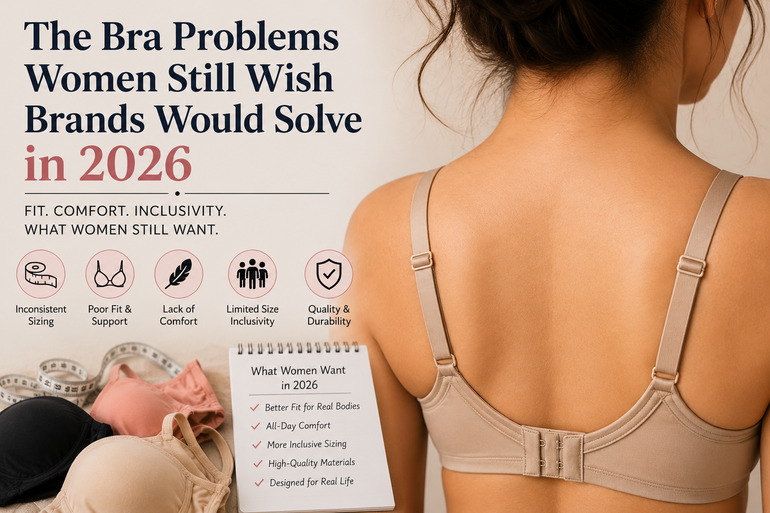
Women Continue to Demand Better Bra Fit, Comfort, and Size Inclusivity in 2026
Despite years of innovation in lingerie design, bra technology, and size expansion, one aspect continues to dominate consumer feedback in 2026: women still struggle to find bras that deliver consistent fit, comfort, and support. While major brands have invested heavily in inclusive marketing campaigns and new product lines, research suggests that fundamental fit challenges remain unresolved across global markets.
Research Continues to Highlight Widespread Fit Problems.
The bra-fitting problem is supported by a growing body of academic research. One of the most frequently cited studies, published in Chiropractic & Osteopathy by researchers at the University of Portsmouth, found that approximately 80% of women were wearing an incorrectly sized bra.
The study also noted that larger-busted women were particularly likely to experience fit-related issues that could affect comfort and physical well-being. More recently, researchers from the International Medical College (IMC) in Krems, Austria, examined bra fit quality.
They reported that objective fitting problems were present among all participants studied, even when many women believed their bras fit correctly. The findings suggested that consumers often adapt to discomfort rather than recognize poor fit. Only 51% of the time can they identify their proper fit.
Traditional Sizing Systems Are Facing Growing Criticism.
Industry experts increasingly argue that conventional cup-and-band sizing systems were never designed to accommodate the full diversity of women’s body shapes. While sizing charts remain the foundation of bra manufacturing worldwide, critics say they fail to account for variations in breast shape, asymmetry, torso proportions, and changes caused by pregnancy, menopause, aging, or weight fluctuations.
Research published in the International Journal of Fashion Design, Technology and Education found that cup construction, band placement, and strap positioning frequently contributed to poor fit outcomes. The study suggested that the industry’s reliance on standardized sizing may overlook significant anatomical differences among consumers.
As a result, many women report that bras labeled with the same size can fit dramatically differently across brands, creating confusion and increasing product returns.
Size Inclusivity Remains an Industry Challenge.
Many lingerie brands have expanded their size offerings during the past decade, but questions remain about how inclusive those efforts truly are. A 2026 size inclusivity analysis published by Vogue Business reported that although more fashion and apparel companies now advertise extended size ranges, product availability and consistency often remain limited in practice.
For lingerie manufacturers, the challenge is particularly complex. Producing larger cup sizes or smaller band sizes often requires different engineering approaches, materials, and testing procedures. Industry analysts note that some brands continue to prioritize commercially popular sizes while offering limited selections at the extremes of the size spectrum.
Consumer advocates argue that true inclusivity involves more than expanding size charts. It requires equal access to style choices, comfort features, and quality construction across all size categories.
Technology Promises Solutions, but Adoption Remains Slow.
To address long-standing fit concerns, some companies have invested in emerging technologies such as 3D body scanning, AI-powered fitting tools, and digital measurement platforms. These systems aim to provide personalized recommendations based on body shape rather than relying solely on traditional measurements.
However, adoption remains uneven. While premium and direct-to-consumer brands have embraced digital fitting technologies, many mass-market retailers continue to rely on conventional sizing methods due to cost and operational constraints.
Industry observers note that technology alone may not solve the problem. Accurate fitting systems still depend on high-quality data, consumer participation, and product designs that accommodate diverse body profiles.
Comfort Has Become the New Consumer Priority.
Another major trend shaping the market is the growing emphasis on comfort. Following years of increased demand for wireless bras, soft-cup designs, and flexible materials, consumers are placing greater value on wearability than ever before.
Research published in the NIH found that poorly fitted bras can contribute to discomfort, shoulder pressure, movement restriction, and musculoskeletal complaints. The study concluded that improved bra support and fit could significantly reduce these issues.
As remote work, hybrid lifestyles, and wellness-focused purchasing habits continue to influence consumer behavior, comfort is increasingly viewed as a product requirement rather than a premium feature.
Related Posts
Social Media Reshapes Bra Shopping as Consumer Discovery Moves Beyond Traditional Retail
The way consumers shop for bras has undergone a significant transforma
The Most Common Bra Myths Debunked by Medical Experts
For years, advice about bras has been passed down through family tradi

Bra Conversations Remain Restricted Across Many Societies
Despite growing awareness of women's health issues worldwide, discussi

Gen Z Shopping Habits Reshaping the Global Intimate Apparel Market
The intimate apparel industry is undergoing a significant transformati

The Workplace and the Invisible Expectations Around Bras
The modern workplace has become more flexible in many ways. Dress code

Why the Global Bra Market Is Growing: Key Trends Driving Demand in 2026 and Beyond
The global bra market is growing faster than ever. What was once seen
POST COMMENT