Full-Cup vs. Balconette Bras: Which Is Better for a Sagging Bust?
Sagging, medically called ptosis, happens to almost every woman over time. It is driven by age, gravity, weight change, pregnancy, and skin elasticity, not by your bra choice. Even so, the right bra style changes how supported and confident you feel every day.
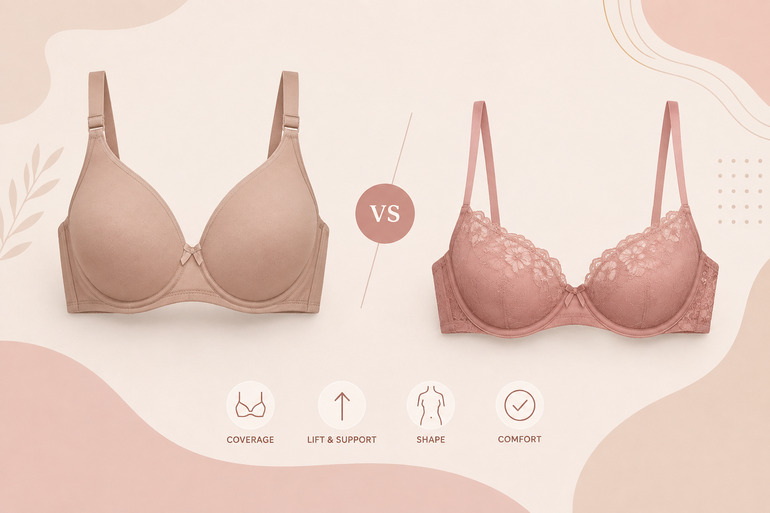
Two styles come up again and again in this debate: the full-cup bra and the balconette bra. Here, we compare both in detail, backed by real fitting data and clinical research, so you can pick the one that actually works for your body.
What Is a Full-Cup Bra?
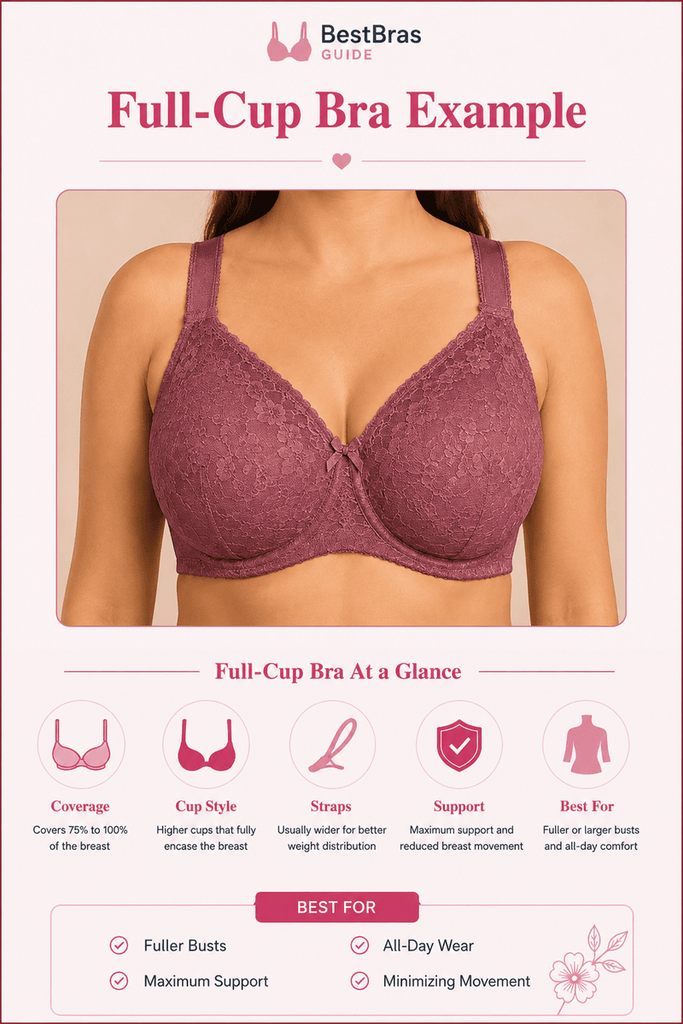
A full-cup bra is designed to provide generous coverage and reliable support. Its cups cover most of the breast, sitting higher on the chest than many other bra styles. The straps are also often wider, which can help distribute weight more evenly across the shoulders.
Because the cups surround and support more of the breast, a full-cup bra can help keep the bust secure and reduce movement during everyday activities. This makes it a popular choice for women with fuller or sagging busts, as well as anyone who prefers a supportive, comfortable fit with more coverage.
What Is a Balconette Bra?
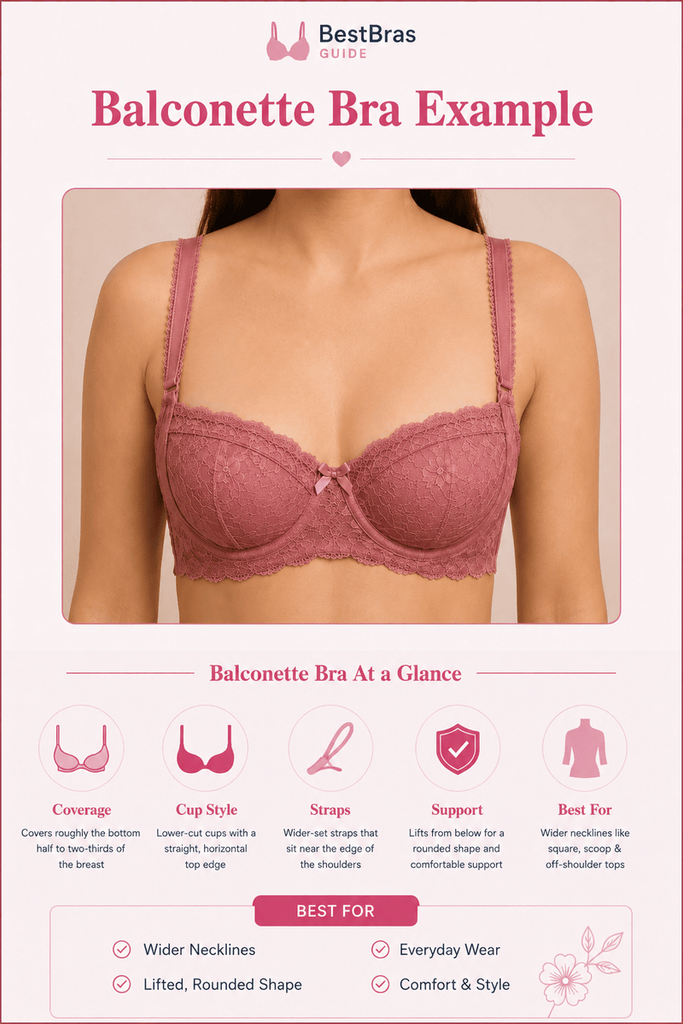
A balconette bra, also known as a balcony bra, is designed to offer lift with less coverage than a full-cup style. Its cups usually cover the lower half to around two-thirds of the breast, leaving more of the upper bust visible.
The cups are cut lower across the top and often have a straighter, more horizontal shape. This helps lift the breasts from underneath and creates a rounded, open neckline. The straps are also set wider apart, closer to the shoulders, which makes balconette bras a good match for square, scoop, and other wider-neck tops.
Understanding Breast Sagging: The Ptosis Grades
Breast sagging, medically known as breast ptosis, can vary considerably from one person to another. Clinicians often describe the degree of ptosis using the Regnault classification, which assesses the position of the nipple in relation to the natural crease beneath the breast, known as the inframammary fold (IMF). This classification is commonly used in clinical and surgical assessment, as explained by StatPearls on NCBI.
Understanding these grades can provide useful context when considering bra support for sagging breasts. However, the grade alone does not determine which bra will fit best. Breast size, shape, tissue distribution, band fit, and personal comfort are also important.
| Grade | Position of the Breast’s Tip | What It Looks Like |
| Grade 1 (Mild) | At or near the level of the fold | Slight drop, barely noticeable in clothes |
| Grade 2 (Moderate) | Below the fold, but above the lowest breast tissue | Clear sag, breast tissue hangs at that point |
| Grade 3 (Severe) | Below the fold and at the lowest point of the breast | Points downward, most pronounced sag |
Why Bra Style Matters for a Sagging Bust?
Breast sagging develops gradually as the skin and supporting tissues of the breast lose elasticity over time. Cooper’s ligaments are part of this support system, but sagging is influenced by several factors, including age, pregnancy, genetics, changes in breast size and weight, and the natural effects of gravity.
A bra cannot reverse existing sagging, and there is limited evidence that everyday bra wear can prevent it altogether. What the right bra can do is provide immediate support. A well-fitted style can lift and contain the breast tissue, reduce uncomfortable movement, and create a more supported shape under clothing.
This becomes especially important during exercise, when breasts are exposed to greater movement and supportive sports bras can significantly improve comfort.
It is also important to separate breast sagging from common lingerie myths. Going braless or wearing the “wrong” bra is not considered a direct cause of ptosis. As a plastic surgeon explains in The Well by Northwell, breast sagging is a natural change influenced by multiple biological and lifestyle factors rather than simply by bra-wearing habits.
For someone with a sagging bust, then, bra style matters primarily because of the support, lift, containment, and comfort it provides now. The best choice is one that works with your breast shape and level of support needed, not one that promises to permanently change the breast itself.
Myth Check: Does a Bra Actually Prevent Sagging?
This is one of the most searched and most misunderstood questions in bra fitting. A widely cited 2010 study on mastopexy patients found that age, smoking, higher BMI, and larger cup size were the strongest predictors of ptosis, not bra habits.
On the other hand, a small, non-peer-reviewed 15-year French study often cited in the media suggested women who skipped bras developed slightly firmer breast tissue. That study only tracked a small group of younger women, so it isn’t considered conclusive.
The honest takeaway, though: a bra won’t stop natural sagging, but it also won’t cause it. What it does is manage comfort, movement, and shape control today.
The Fit Problem Nobody Talks About.
Style matters less than fit, and most women are wearing the wrong size. A study covered by Chiropractic & Osteopathy research found that about 80% of women wear the wrong bra, and 70% wear one that’s too tight. Separately, an analysis reported by The Conversation of 309 women found only one in ten had a correctly fitted bra, with most issues coming from a badly fitted band or the wrong cup size.
This matters more for a sagging bust because a loose band or wrong cup size removes most of the support a full-cup or balconette bra is designed to give, no matter how well-made the bra is.
Which One Wins for a Sagging Bust?
Well, it differs.
When Full-Cup Is the Better Choice?
For most women dealing with moderate to severe sagging, a full-cup bra is the safer pick. It holds more breast tissue in place, reduces bounce, and spreads weight evenly across a wider band and straps.
Full-cup bras also work better for fuller or larger busts, where extra fabric and structure prevent strain on the shoulders and back. This makes them a strong choice for daily wear and long hours on your feet.
When Can a Balconette Still Work?
Balconette bras are not off the table, especially for Grade 1 sagging. A well-built balconette with a strong underwire and firm band can still offer decent lift. A full-bust balconette from a brand cut for larger cups, such as Freya, Fantasie, Panache, or Elomi, can support fuller busts while still lifting the shape.
Balconette bras shine when you want a rounded look under a specific outfit, like a wide-neck top or off-shoulder dress. Just don’t expect the same all-day support you’d get from a full-cup style, particularly for Grade 2 or 3 sagging.
The Bottom Line.
If daily comfort and maximum support are your priority, a full-cup bra is the stronger option for a sagging bust, especially for Grade 2 and Grade 3 ptosis. It holds more tissue and reduces movement throughout the day. A balconette bra can still work well for mild sagging or special outfits, but it shouldn’t replace your everyday supportive bra.
The real key is the fit. Since studies show most women wear the wrong size, a well-fitted bra in either style will always outperform a poorly fitted one. When in doubt, get measured, try both styles, and choose based on how your body feels, not simply how it looks.
FAQs.
Can a bra fix sagging breasts permanently?
No. A bra manages support and shape while you wear it, but it cannot reverse stretched Cooper’s ligaments or restore lost skin elasticity. Only a surgical lift changes the underlying structure.
Which is better for large, sagging breasts: full-cup or balconette?
Full-cup is generally better for large or heavily sagging breasts, since it distributes weight across more fabric and a wider band. A balconette can still work if it’s specifically cut for a full bust with reinforced underwire.
Does wearing a bra all day make sagging worse?
No solid evidence supports this. Most fitting experts agree the type of bra and the correct size matter far more than the number of hours you wear one.
How often should I get refitted?
Every 6 to 12 months, or sooner after weight change, pregnancy, or breastfeeding, since breast size and shape shift with these changes.
Related Posts
Minimizer vs Support Bra: Which Is Better for a Fuller Bust?
Choosing the right bra becomes more important when you have a fuller b
How Weight Changes Affect Bra Size
Your bra should feel comfortable and supportive every day. But when yo
Push-Up Bra Guide: How to Choose the Right Fit & Style
Getting ready for an outfit you love, but something still feels off? T
Signs Your Bra Is Too Tight and Causing Skin Irritation
Bras are designed to provide support and comfort throughout the day. H
10 Signs You’re Wearing the Wrong Bra Size (And How to Fix)
Finding the right bra size directly impacts your comfort, posture, and
Bra Styles for Different Breast Shapes: Find Your Perfect Fit
Finding a bra that fits well is not always easy. You may try many styl
POST COMMENT