
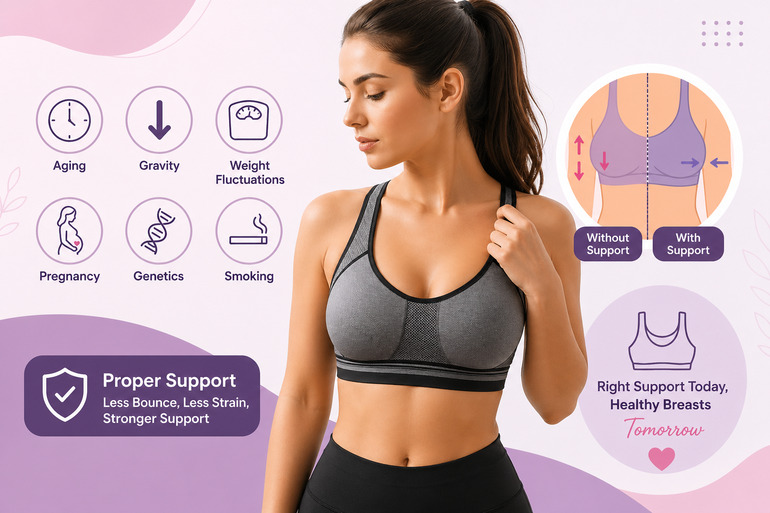
What Causes Breast Sagging? How Proper Support Helps During Workouts
Breast sagging is something most women notice at some point, and it can feel confusing, especially if you’re active and already taking good care of your body. A common question that comes up is whether working out actually causes sagging or if it can help prevent it. The truth sits in between.
Sagging itself is a natural process tied to aging and genetics, but certain habits, particularly how you support your breasts during exercise, can speed it up or slow it down.
This guide breaks down what actually causes breast sagging and how the right support during workouts protects your body long-term.
What Is Breast Sagging?
Breast sagging, medically known as ptosis, happens when breasts lose firmness and begin to sit lower than their original position. According to clinical sources, the underlying mechanism is a change in breast volume that the suspensory ligaments and skin don’t fully compensate for.
In simple terms, this can look like:
- Breasts appearing less firm or full
- A gradual downward shift in position
- Nipples pointing slightly lower than before
This happens because the skin and the internal connective tissue that holds breast tissue in place (Cooper’s ligaments) stretch over time and lose their elasticity
Mini takeaway: Sagging is simply a loss of firmness and a downward shift, which is a natural, common process, not a medical problem.
What Causes Breast Sagging?
It’s easy to assume sagging is just about age, but it’s actually the result of several factors working together. Breasts contain no muscle of their own. As a result, breast tissue rests on the pectoralis muscle and depends on skin elasticity as its main external support system. Once that supporting tissue stretches, it doesn’t fully spring back.
Common Causes of Breast Sagging
Several factors contribute to sagging over time:
- Aging: Collagen production naturally declines, and this process typically accelerates after age 40 as collagen production decreases. Skin loses collagen and becomes less elastic.
- Gravity: Constant downward pull stretches tissues.
- Weight fluctuations: Repeated gain and loss stretch skin beyond its capacity to recover.
- Pregnancy: The number of pregnancies a woman has had is strongly correlated with ptosis, with effects increasing after each pregnancy.
- Genetics: Some women naturally have weaker skin elasticity.
- Smoking: A history of smoking breaks down elastin, the protein that gives skin its elasticity and helps support the breast.
In most cases, sagging develops gradually from a combination of these factors rather than any single cause.
Does Working Out Cause Breast Sagging?
This is one of the most common concerns, especially among women who run or do high-impact training. The short answer: Exercise itself doesn’t cause sagging.
What can contribute to it is exercising without adequate support. During physical activity, breasts move in multiple directions at once, and research backs this up directly.
Studies comparing running with and without a bra found that breast-and-torso movement stayed coordinated for more than 90% of the running cycle when wearing a bra, compared to only around 66% when running without one.
The real issue is excessive, uncontrolled movement, not the activity itself. Without proper support:
- Breasts can bounce significantly during running or jumping
- Ligaments are repeatedly stretched beyond their natural range
- Skin loses firmness faster than it would otherwise
So the goal is to control movement while you do it.
Why Do Breasts Sag at a Young Age?
Sagging in your 20s or 30s can feel alarming, but it’s more common than people think. It’s usually linked to lifestyle and structural factors rather than age alone.
Common reasons for earlier sagging:
- Larger breast size, which puts more strain on the supporting tissue
- Naturally less elastic skin (genetics)
- Rapid weight loss or gain
- Regular high-impact workouts without adequate support
- Wearing the wrong bra size
Of these, an unsupportive or poorly fitted bra is one of the most overlooked and easiest to fix.
How Proper Support Reduces Breast Bounce?
A well-fitted sports bra limits how much breast tissue moves during activity, which directly reduces stress on the ligaments responsible for shape and firmness. This is measurable.
Biomechanics research has found that sports bras reduce breast movement by anywhere from roughly 50% to nearly 80% compared to going without support, depending on the bra’s design and fit.
Support also matters beyond just shape. Research has shown that lower levels of breast support are linked to altered trunk and pelvis movement patterns during running, which suggests the effects of inadequate support extend beyond the chest to overall movement mechanics.
A good sports bra:
- Holds breast tissue securely in place
- Limits both vertical and side-to-side movement
- Distributes weight evenly across the chest
- Reduces strain on skin and connective tissue
Mini takeaway: The less your breasts move during activity, the less stress builds up in the tissues that hold their shape.
Best Sports Bra to Prevent Sagging.
Not all sports bras provide the same level of support. Choosing the right type depends on your activity level.
| Type of Activity | Support Level Needed | Recommended Bra Type |
| Walking / Yoga | Light Support | Compression Sports Bra |
| Gym / Cycling | Medium Support | Hybrid (Compression + Cups) |
| Running / HIIT | High Support | Encapsulation Sports Bra |
The Bottom Line.
Understanding what causes breast sagging puts you in a better position to take care of your body. Aging and genetics are factors you can’t control, but how you support your breasts during exercise is one you can.
Exercise is good for you, that hasn’t changed. The key is pairing it with the right support so movement doesn’t come at the cost of long-term firmness.
Wear a well-fitted sports bra suited to your activity level, and you’ll protect both your comfort today and your shape for years to come.
Related Posts
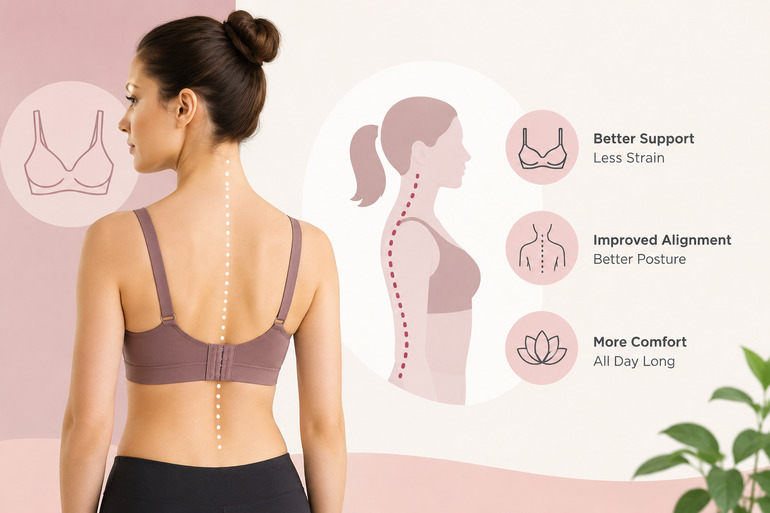
Bras and Posture: What’s the Real Link?
Do you experience tension, stiffness, or pain in your upper back, neck
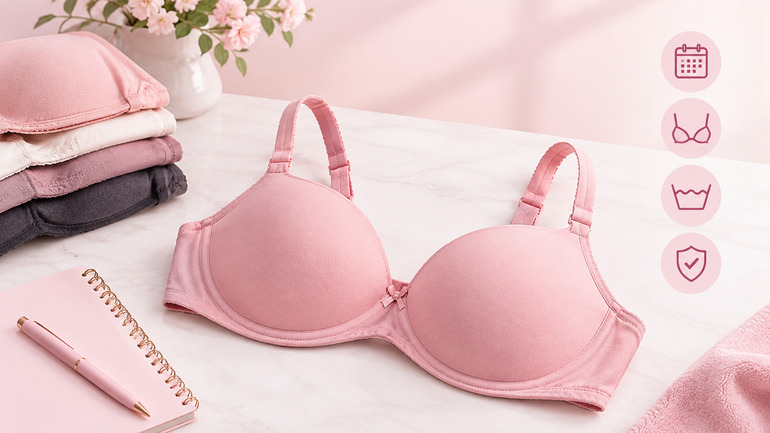
How Often Should You Replace a Bra? Signs It’s Time for a New One
Most women keep a bra far longer than they should. You love the fit, t
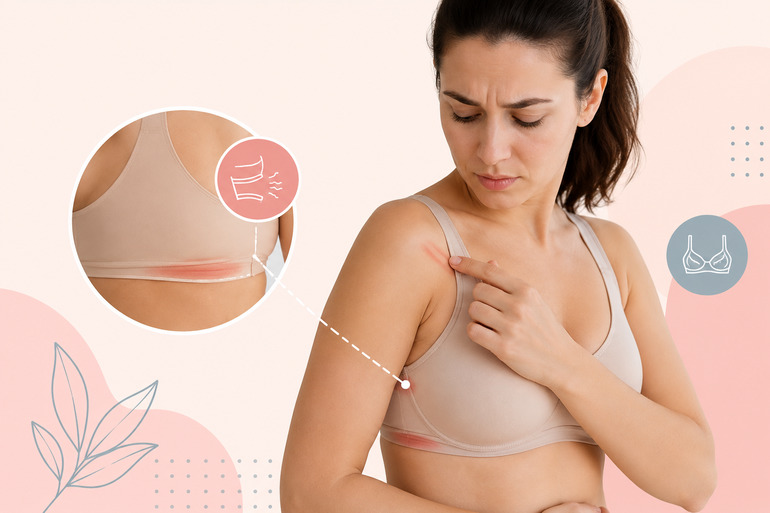
Signs Your Bra Is Too Tight and Causing Skin Irritation
Bras are designed to provide support and comfort throughout the day. H
Can Bras Prevent Sagging? Science-Backed Answer
For years, many people have been told that wearing a bra every day can
POST COMMENT