
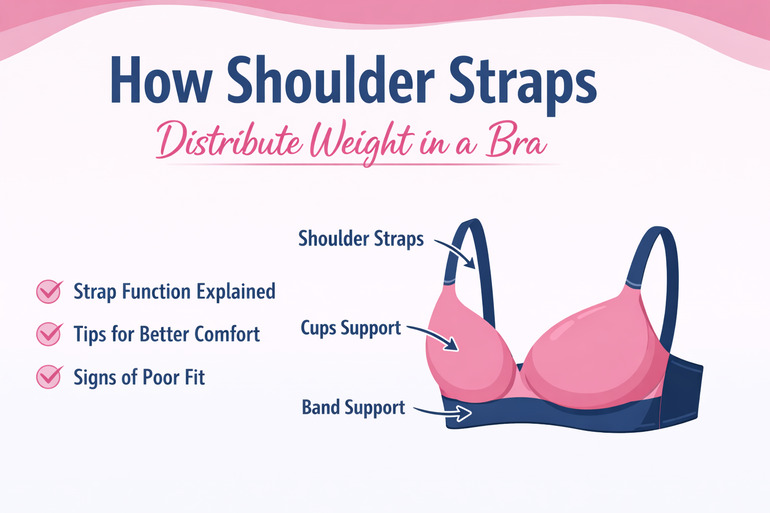
How Shoulder Straps Distribute Weight (And Why Your Bra Hurts)
Shoulder straps play an important role in how a bra feels throughout the day. When they work well, you barely notice them. When they don’t, they can dig into your shoulders, cause pain, or make your bra feel heavy and uncomfortable.
Many people think shoulder straps are meant to carry most of the breast weight. That’s not true. Understanding what straps actually do and what they shouldn’t do can make a huge difference in comfort and support.
How Weight Is Really Supported in a Bra.
A bra works as a system. Each part has a job.
- The band is the main source of support
- The cups hold and shape the breasts
- The shoulder straps help balance and stabilize everything
In a well-fitted bra, the band provides most of the support by wrapping firmly around the ribcage. This area is strong and stable, which makes it ideal for carrying weight.
Shoulder straps are not designed to lift or hold heavy weights on their own. Instead, they assist the band by keeping the cups in the right position.
How Shoulder Straps Distribute Weight.
Shoulder straps help spread small amounts of pressure evenly across the shoulders. Their main purpose is balance, not load-bearing.
When fitted correctly, straps:
- Keep the cups close to the body
- Prevent the bra from tilting forward
- Help maintain shape and positioning
- Add light support without strain
You should feel gentle contact on your shoulders. If straps are doing too much work, it usually means another part of the bra is not doing its job properly.
What Happens When Straps Carry Too Much Weight?
When shoulder straps take on too much load, problems appear quickly.
Common signs include:
- Red marks or grooves on the shoulders
- Shoulder or neck pain
- Headaches or upper-back tension
- A feeling that the bra is “pulling down”
This often happens when the band is too loose. When the band cannot support the weight, the straps are forced to compensate.
Tightening the straps may feel helpful at first, but it usually makes discomfort worse over time. This is one of the most common bra fitting mistakes, especially when the band size or cup fit is incorrect.
Strap Design and Comfort.
Not all shoulder straps feel the same. Design details matter for comfort.
Key factors include:
Strap Width
Wider straps spread pressure over a larger area. This reduces digging and improves comfort for heavier busts.
Strap Elasticity
Straps should stretch slightly but not feel bouncy. Too much stretch causes poor support. Too little can feel stiff and restrictive.
Adjustability
Good straps allow easy adjustment. This helps fine-tune fit and adapt to body changes or daily movement.
Padding
Padded straps can improve comfort, but they do not replace proper support. Padding helps manage pressure, not weight.
How to Tell If Your Shoulder Straps Are Fitted Correctly.
You don’t need a fitting room to check your strap fit. Simple signs can tell you a lot.
Your straps are likely fitted well if:
- They stay in place without slipping
- They don’t dig into your shoulders
- You can slide one finger underneath comfortably
- The band stays level around your body
Your straps may be doing too much if:
- Your shoulders feel sore by the end of the day
- Tightening the straps feels necessary for the lift
- Loosening them causes the cups to drop
In most cases, strap problems point to band or cup issues rather than the straps themselves.
How to Adjust Shoulder Straps Properly.
Correct adjustment is simple, but it is often done wrong.
Follow these steps:
- Put on the bra and fasten the band snugly
- Lean forward slightly and position the cups
- Adjust straps until they sit flat on the shoulders
- Make sure they are secure but not tight
Avoid pulling straps too short. Over-tightened straps can distort cup shape and increase shoulder strain.
A good rule: if loosening the straps causes major loss of support, the band may be too loose.
The Bottom Line.
Shoulder straps are not meant to carry a heavy weight. Their real job is balance, stability, and comfort.
When straps hurt, dig in, or feel overworked, the issue usually starts elsewhere, most often with the band fit. A supportive band, well-shaped cups, and correctly adjusted straps work together to create comfort.
The goal is balance. When each part does its job, your bra should feel supportive, light, and easy to wear all day.
2 Comments
-
Pingback: How Often Should You Replace a Bra?
POST COMMENT
Related Posts
Find Your Ideal Bra by Understanding Your Breast Shape
For many people, finding a bra that truly fits can feel frustrating. Y
How to Choose the Right Sports Bra for an Athletic Body Type
Let’s be honest, most sports bras are not made with athletic bodies
Minimizer vs Support Bra: Which Is Better for a Fuller Bust?
Choosing the right bra becomes more important when you have a fuller b
Front vs. Back Closure Bras: The Best Choice for Comfort, Fit, and Support
Choosing a bra is not only about style. The closure type can affect co
Bust Measurement vs Bra Measurement: Key Differences Explained (Fit Guide)
Finding the right fit starts with understanding your body, but when it
Petite vs Plus Size: Finding the Right Bra Support Level
Finding the right bra shouldn’t feel like a daily struggle, but for
Pingback: Minimizer vs. Support Bra: Best Choice for Fuller Bust