
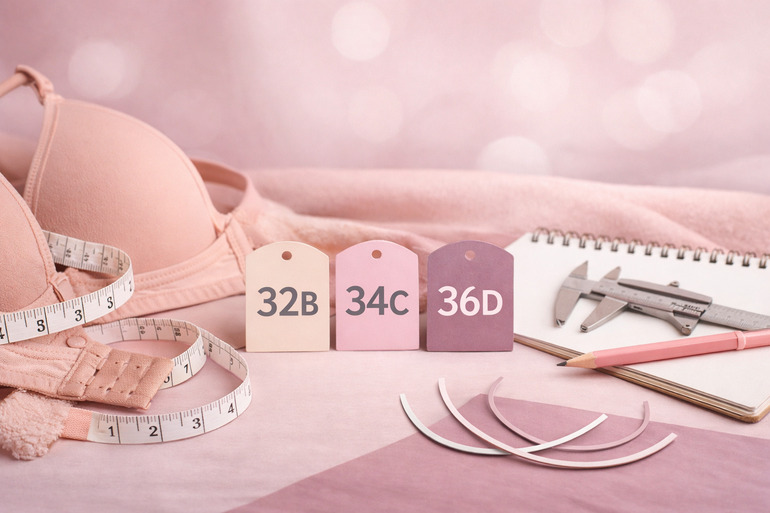
Understanding Band and Cup Sizes
Choosing the right bra size can feel confusing. Many people see numbers and letters on a bra label but are not sure what they really mean. Because of this, a large number of people end up wearing bras that do not fit properly.
Understanding band and cup sizes is the key to finding a bra that feels comfortable and provides the right support. When you know how bra sizing works, shopping becomes easier, and you are more likely to find styles that fit well.
In this guide, you will learn what band and cup sizes mean, how they work together, sister sizes, and practical tips to help you find a bra that fits comfortably.
Key Takeaways
- Bra sizes have two parts: the number is the band size, and the letter is the cup size.
- The band provides most support, so it should fit snugly and stay level across the back.
- Cup size depends on band size, so the same letter can have different volumes.
- Sister sizes (like 34C, 32D, and 36B) have similar cup volume but different band sizes.
What Do Band and Cup Sizes Mean?
Bra sizes usually include a number and a letter, such as 34B, 36C, or 32D.
Each part of the size has a different meaning:
- The number refers to the band size
- The letter refers to the cup size
The band size measures the area around your ribcage, just under the bust. The cup size represents the volume of the breasts relative to the band size.
Together, the band and cup create the complete bra size. Both parts are important. If either one is wrong, the bra may not fit comfortably.
Understanding Band Size.
The band size is the number in the bra size, such as 32, 34, 36, or 38. It represents the measurement around your ribcage directly under the bust.
The band plays a very important role in bra support. In fact, most of the support in a bra comes from the band, not the straps.
A properly fitted band should:
- Sit straight across your back
- Feel snug but not tight
- Stay in place without riding up
- Provide firm support around the ribcage
If the band is too loose, the bra may move around, and the straps may dig into your shoulders. If it is too tight, it may feel uncomfortable or restrict movement.
Finding the correct band size is often the first step toward a better bra fit.
Understanding Cup Size.
The cup size is the letter in the bra size, such as A, B, C, or D.
Many people assume cup sizes represent fixed breast sizes, but that is not exactly true. Cup size actually represents the difference between the bust measurement and the band measurement.
For example:
- A small difference between measurement results in a smaller cup.
- A larger difference results in a larger cup.
This means cup sizes are relative to the band size. A C cup on a 32 band is smaller in volume than a C cup on a 36 band.
Because of this relationship, cup size should always be considered together with band size.
How Band Size and Cup Size Work Together.
Band and cup sizes are closely connected. Changing one often affects the other.
For example, if you change the band size but keep the same cup letter, the actual cup volume also changes. This is why a 34C is not the same size as a 36C.
When the band increases, the cup volume increases as well. When the band decreases, the cup volume becomes smaller.
Understanding this relationship helps explain why two bras with different labels may still fit similarly. This idea leads to an important concept known as sister sizing.
What Are Sister Sizes?
Sister sizes are different band sizes that share the same cup volume, allowing for a similar fit in the cups despite the band changing.
For example:
- 34C
- 32D
- 36B
These sizes may fit similarly in the cups, even though the band size changes.
Sister sizing can be helpful when:
- The band feels too tight
- The band feels too loose
- The cups fit well, but the band does not
For instance, if a 34C fits well in the cups but the band feels tight, you might try a 36B. If the band feels loose, a 32D could work better.
Sister sizing gives shoppers more flexibility when searching for the right fit.
Tips for Finding the Right Bra Fit.
Finding the right bra size may take a little patience, but a few simple tips can make the process easier.
- Try different brands: Bra sizing can vary slightly between brands.
- Begin with the loosest hook: When trying on a new bra, use the loosest hook to ensure comfort and allow room for tightening as the bra stretches.
- Move around when trying on a bra: Raise your arms, sit, and bend slightly to see if the bra stays in place.
- Check the band position: The band should stay level across your back.
- Re-measure regularly: Body changes can affect bra size, so measuring every year or so is helpful.
The Bottom Line.
Understanding band and cup sizes makes bra shopping much easier. When you know what each part of the size represents, you can focus on finding a bra that fits comfortably and provides the support you need.
Remember that bra sizing is not just about numbers and letters. The way a bra fits your body is what matters most. Taking a few minutes to measure yourself, checking the fit carefully, and trying sister sizes when needed can help you find a better match.
With the right size, a bra should feel supportive, comfortable, and easy to wear throughout the day.
2 Comments
-
Pingback: How Often Should You Replace a Bra?
POST COMMENT
Related Posts
The Psychology of Bra Confidence: Why It Really Matters
You put on a bra every morning without thinking twice. It feels like t
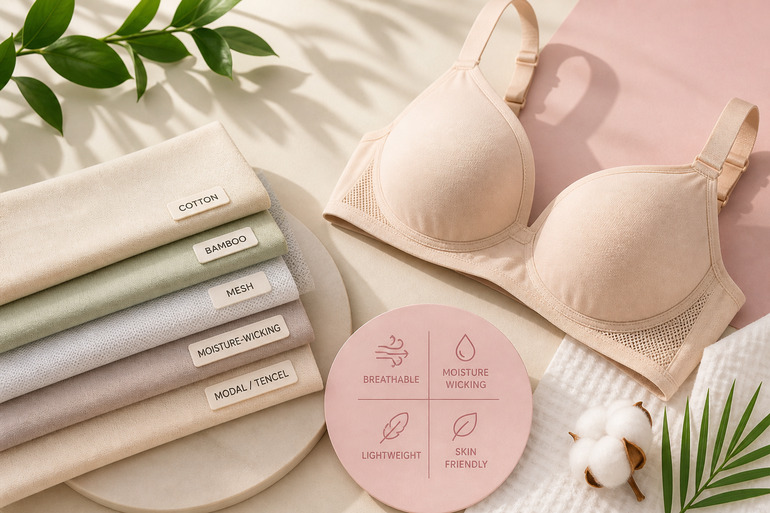
Best Breathable Bra Fabrics for Hot Weather and All-Day Comfort
Hot weather may turn even your favorite bra into a source of discomfor
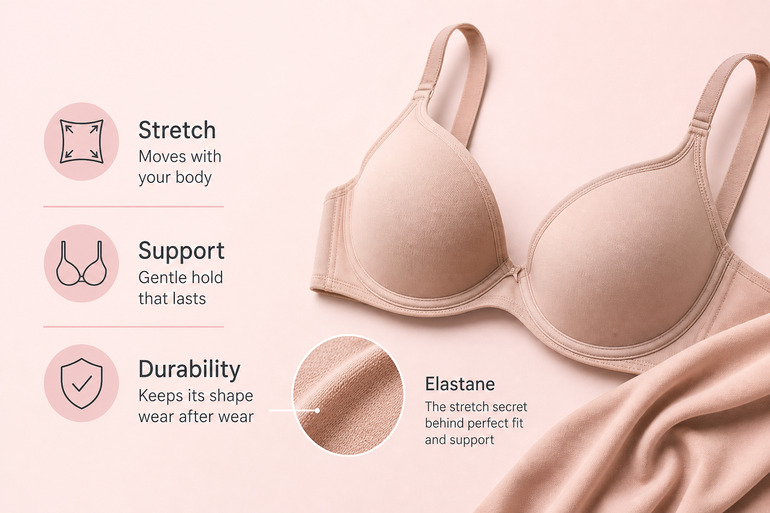
The Role of Elastane in Bras: Why Stretch Matters for Fit and Support
Most people judge a bra by its design, padding, or brand, but rarely b
Bra Styles for Different Breast Shapes: Find Your Perfect Fit
Finding a bra that fits well is not always easy. You may try many styl
Wide-Set vs Close-Set Breasts: A Simple Bra Fit Guide
Does your bra fit fine in the cup, but still feel off in the middle? T
Bra Evolution Through the Decades: A Complete History
Today’s bras are designed for a wide range of purposes, including ev
Pingback: Full-Cup vs. Balconette Bras for Sagging Breasts: Which Is Better?