Small vs Large Bust Differences Explained (Fit, Comfort & Style Guide)
Small vs large bust differences go far beyond cup size, they influence everyday comfort, posture, how clothes fit, and even a woman’s confidence. Many women only notice these differences while shopping for bras or outfits, when fit issues suddenly appear, but they often don’t realize what’s actually causing them.
In this guide, we’ll break everything down in a simple, practical way based on real fitting experience and body ergonomics, so you can better understand your body and make smarter, more comfortable choices in lingerie and styling.
How Is Bust Size Measured?
Bust size is determined by combining two measurements: your band size (measured around the ribcage) and the difference between your bust and band measurements. Cup letters (A, B, C, D, etc.) do not represent the same breast volume across all band sizes.
For example, a 32D is noticeably smaller in volume than a 38D, even though both are D cups. This is why professional bra fitting considers both measurements together.
What is Considered a Small or Large Bust Size?
Bust size is usually measured using band size and cup difference. But there is no single “perfect” definition globally because body proportions vary.
In general terms:
- Small bust: Typically A to B cup range (sometimes small C, depending on body frame)
- Large bust: Usually D cup and above (again, depending on frame and proportions)
A more accurate way to understand it is by proportion, not just cup letter. A B cup on a small frame may look fuller than expected, while a D cup on a broader frame may appear balanced.
Bust Size Examples.
| Band Size | Cup Size | General Appearance |
| 32A | Small | Petite bust |
| 34B | Small-Medium | Balanced appearance |
| 34C | Medium | Average proportions |
| 36D | Large | Fuller bust |
| 38DD | Large | Requires stronger support |
Body Shape Differences in Small Bust vs Big Bust.
The visual and structural differences go beyond appearance. They affect how clothing sits, how weight is distributed, and even posture patterns.
| Feature | Small Bust | Large Bust |
| Upper body weight | Lighter | Heavier |
| Shoulder pressure | Minimal | Higher strain |
| Clothing fit | Less chest gap issues | Button gaps common |
| Posture impact | Neutral | May lean forward over time |
Common Myths About Small and Large Busts.
- Myth: Large busts always cause back pain.
Reality: Pain is more commonly linked to poor bra support than breast size alone.
- Myth: Small busts do not need supportive bras.
Reality: Properly fitted bras can improve comfort, shape, and confidence for every bust size.
- Myth: Cup letters alone determine breast size.
Reality: Band size changes cup volume significantly.
Problems Faced by Women with Large Bust vs Small Bust.
From a fitting perspective, both sizes come with unique challenges.
Common issues with large busts:
- Shoulder pain from bra straps
- Back discomfort due to the weight load
- Difficulty finding supportive bras
- Clothing not fitting properly at the chest
Common issues with small busts:
- Gaping in bras or tops
- Difficulty filling structured cups
- Less support options in some designs
- Desire for shaping or volume in outfits
In most cases, discomfort comes not from size itself but from wrong bra fitting or poor support design.
Everyday Activities: Small Bust vs Large Bust.
| Activity | Small Bust | Large Bust |
| Walking | Comfortable | Needs better support |
| Running | Less movement | High-support bra recommended |
| Office Wear | Easy layering | Structured bras improve comfort |
| Sleeping | Usually comfortable | Some women prefer sleep bras |
How Does Bust Size Affect Posture and Comfort?
Bust weight directly affects how the upper body aligns.
For large busts:
- Extra weight pulls the shoulders forward
- Can increase upper back tension if support is weak
- Requires a stronger bra structure for balance
For small busts:
- Less gravitational pull on posture
- Easier natural alignment
- Comfort depends more on fit than support strength
Research in biomechanics suggests that uneven weight distribution in the chest area can influence spinal alignment over time, especially if support garments are not properly fitted.
According to biomechanical research, larger breasts may increase the load on the shoulders, neck, and upper back during prolonged standing, walking, and physical activity. A properly fitted supportive bra helps distribute this weight more evenly and may reduce discomfort.
Which Bust Type Has More Comfort in Daily Life?
Comfort does not depend on bust size alone, it depends more on proper support and fit. In general, smaller busts may experience less physical strain in daily movement, while larger busts require more structured support to maintain comfort throughout the day.
However, with the right bra design and sizing, both small and large bust types can achieve excellent comfort. The real difference comes from how well the bust is supported, not the size itself.
Small Bust vs Large Bust During Exercise.
For women with a smaller bust, low- to medium-impact sports bras are often sufficient for activities like walking, yoga, or strength training.
Women with a larger bust usually benefit from high-impact sports bras that reduce breast movement during running, jumping, or other vigorous exercises. Proper support during workouts helps improve comfort and may reduce strain on the shoulders and upper back.
Styling Tips for Small Bust vs Large Bust.
Clothing can enhance balance and comfort when chosen correctly.
Styling for a small bust:
- Ruffled or padded tops add volume
- Push-up bras create shape definition
- High-neck and structured fabrics add balance
- Layering helps create dimension
Styling for a large bust:
- V-necklines reduce visual bulk
- Supportive structured bras improve outfit drape
- Avoid overly tight chest seams
- Stretch fabrics offer better comfort
Ideal Bras for Small Bust vs Large Bust Comparison.
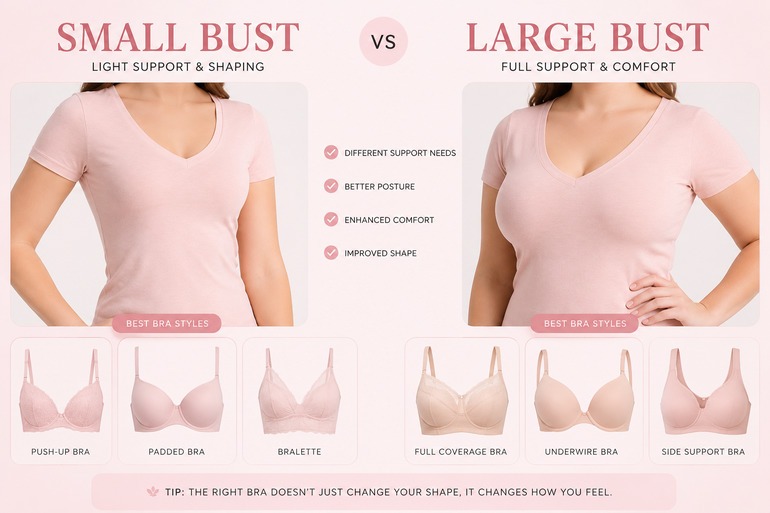
Bra choice plays the biggest role in comfort and shape.
| Bust Type | Best Bra Styles | Why It Works |
| Small bust | Push-up, padded, bralette | Adds shape and lift |
| Large bust | Full coverage, minimizer, underwire support bras | Distributes weight and reduces strain |
Best Fabrics and Clothing Choices for Different Bust Sizes.
Fabric choice plays an important role in how the bust area looks and feels in clothing. For smaller busts, structured fabrics, layering, and padded materials can help create shape and balance.
For larger busts, soft stretch fabrics like cotton blends and jersey offer better comfort and reduce restriction. V-necklines and adjustable designs generally work well for larger busts, while ruffles and detailing can enhance smaller bust proportions. Choosing the right fabric and cut helps improve both appearance and comfort significantly.
Expert Tip: Bra sizing should be checked every 6–12 months, especially after weight changes, pregnancy, or hormonal changes. Wearing the correct band and cup size can significantly improve comfort, posture, and clothing fit.
Best Bra Types for Different Activities.
| Activity | Small Bust | Large Bust |
| Everyday | Bralette | Full Coverage Bra |
| Gym | Medium Support Sports Bra | High Impact Sports Bra |
| Work | Wireless Bra | Side Support Bra |
| Party | Push-up Bra | Balcony Bra |
| Home | Soft Bralette | Wireless Support Bra |
The Bottom Line.
Understanding the differences between a small and large bust isn’t about deciding which is better, it’s about recognizing that each body has unique support and styling needs. The right bra size, supportive design, and well-fitted clothing can make a noticeable difference in comfort, posture, and confidence.
If you experience shoulder pain, gaping cups, or an uncomfortable fit, consider getting professionally measured or reassessing your bra size. Small or large, every bust deserves the right support for everyday comfort.
FAQs.
Not necessarily. A D cup on a smaller band size may appear average, while the same cup on a larger band size represents a different breast volume.
Both can be styled beautifully. The key is choosing clothing cuts and bras designed for your body proportions.
It can. Because breasts contain fatty tissue, some women notice a reduction in breast volume after losing weight.
Yes. While support needs may be lower, bras can improve comfort, shaping, and clothing fit.
Full-coverage, side-support, and well-fitted underwire bras generally provide the best support for larger bust sizes.
1 Comment
POST COMMENT
Related Posts
Front vs. Back Closure Bras: The Best Choice for Comfort, Fit, and Support
Choosing a bra is not only about style. The closure type can affect co
Full-Cup vs. Balconette Bras: Which Is Better for a Sagging Bust?
Sagging, medically called ptosis, happens to almost every woman over t
Wide-Set vs Close-Set Breasts: A Simple Bra Fit Guide
Does your bra fit fine in the cup, but still feel off in the middle? T
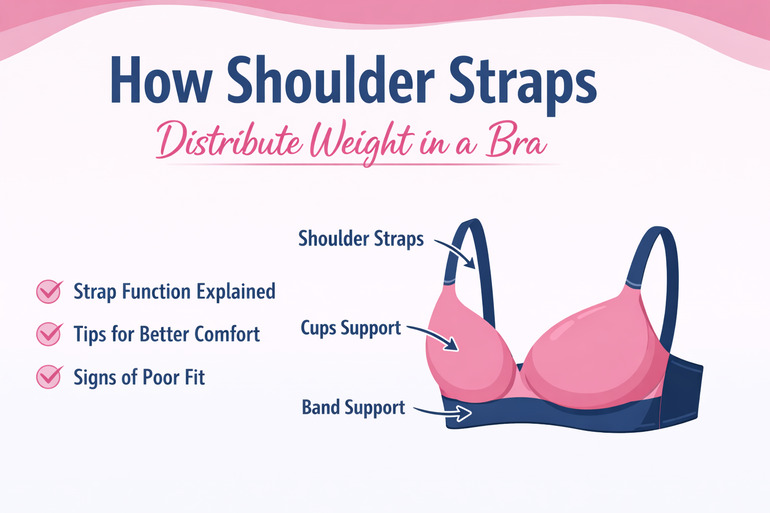
How Shoulder Straps Distribute Weight (And Why Your Bra Hurts)
Shoulder straps play an important role in how a bra feels throughout t
The Psychology of Bra Confidence: Why It Really Matters
You put on a bra every morning without thinking twice. It feels like t
Find Your Ideal Bra by Understanding Your Breast Shape
For many people, finding a bra that truly fits can feel frustrating. Y
Pingback: Front-Closure vs. Back-Closure Bras: Which Gives Better Support?