
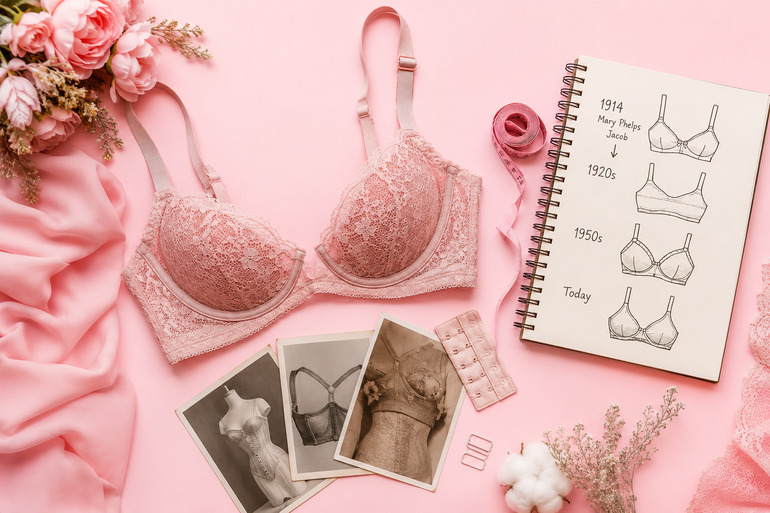
Bra Evolution Through the Decades: A Complete History
Today’s bras are designed for a wide range of purposes, including everyday support, sports, maternity wear, post-surgical recovery, and adaptive use. However, these specialized designs emerged gradually.
The modern bra developed through more than a century of changing fashion preferences, textile innovations, manufacturing advances, and evolving attitudes toward comfort and body shape.
Understanding this history reveals how lingerie has evolved to provide greater variety in comfort, support, sizing, function, and design.
The Evolution of the Bra at a Glance.
| Period | Milestone |
| Late 1800s | Development of early separated-bust supporters and bra-like garments |
| 1914 | Mary Phelps Jacob receives a patent for the Backless Brassiere |
| 1920s | Bust-flattening bandeau bras complement flapper fashions |
| Early–mid 1930s | Alphabetic cup sizing is introduced and popularized |
| 1935 | Whirlpool cup-stitching technique is patented |
| 1940s–1950s | Structured, torpedo, and bullet-bra silhouettes gain prominence |
| 1958–1960s | Lycra is developed and introduced into foundation garments |
| 1977 | The Jogbra is created |
| 1979 | The Jogbra athletic-brassiere patent is granted |
| 1994 | The Wonderbra campaign accelerates the push-up bra trend |
| 2010s | Bralettes and wireless styles gain prominence |
| Today | Greater focus on adaptive design, specialized support, sustainability, and smart-textile research |
Before the Modern Bra.
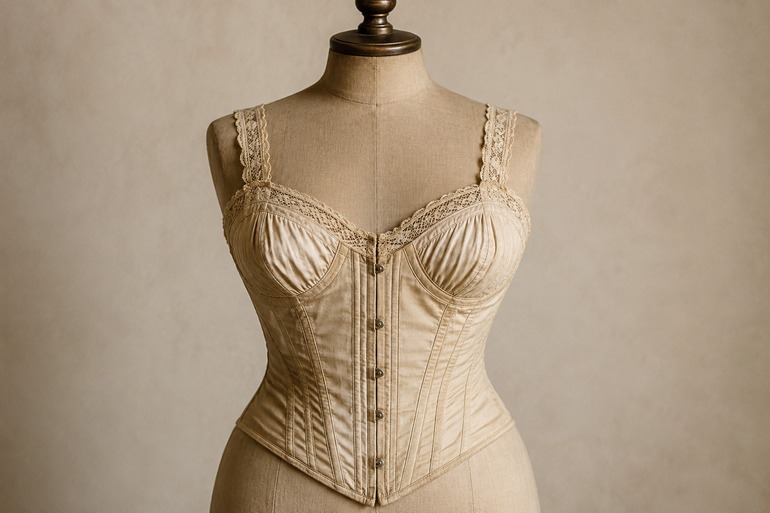
Before modern bras became widely available, many women in Europe and North America relied on corsets, stays, or related foundation garments for support and fashionable shaping.
Corsets remained fashionable for centuries, although some designs restricted movement or caused discomfort, particularly when tightly laced. By the late 19th century, changing clothing styles and growing concerns about comfort encouraged designers to seek alternatives.
In 1914, American socialite Mary Phelps Jacob received a patent for her “Backless Brassiere,” a lightweight design commonly associated with the emergence of the modern bra. Although earlier breast-support garments had already been patented, Jacob’s design became an important milestone in modern lingerie history.
The 1920s and 1930s: Comfort Meets Better Fit.
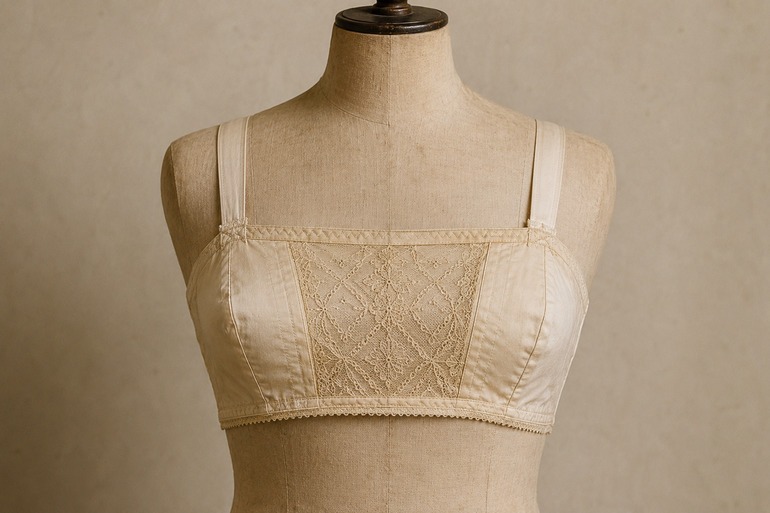
The 1920s introduced the flapper style, which favored a flatter silhouette. Bandeau bras became popular because they compressed rather than enhanced the bust, matching contemporary fashion trends.
A major development arrived in the early 1930s when manufacturers began classifying cup volume using letters. S.H. Camp & Company used A, B, C, and D sizes by 1932, while Warner helped bring alphabetic cup sizing to the mass market during the mid-1930s. However, sizing was not fully standardized and continues to vary between manufacturers.
The 1940s and 1950s: Practicality and Hollywood Glamour.
The transition from corsets to bras had already accelerated during World War I and the 1920s. During World War II, shortages of metal, rubber, and textiles further affected lingerie production, encouraging manufacturers to modify materials and produce more practical garments. Corsets and girdles remained in use, but bras became increasingly central to everyday underwear.
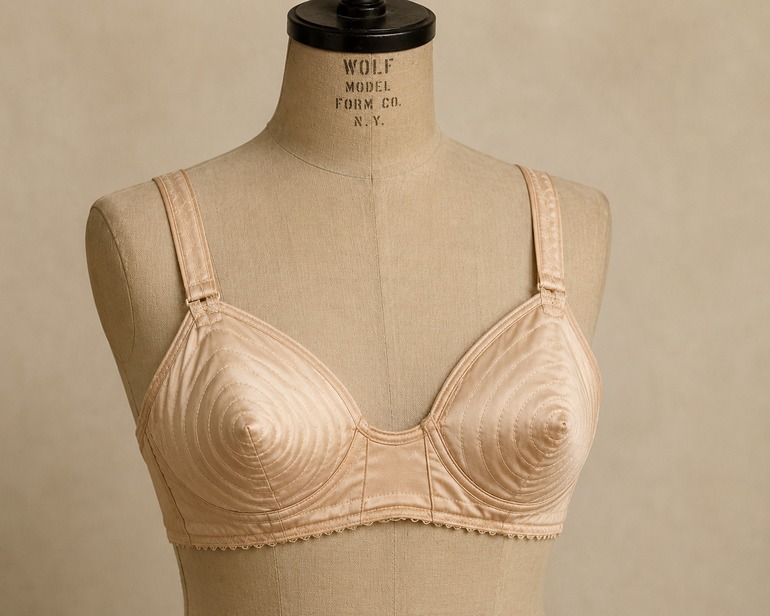
A cup-stabilizing technique known as Whirlpool or concentric stitching was patented in 1935. During the 1940s and 1950s, manufacturers adapted this construction to create increasingly structured and pointed cup shapes.
The 1950s became known for the iconic bullet bra, characterized by its distinctive pointed cups. Hollywood stars, including Marilyn Monroe and Jayne Mansfield, helped popularize the style, making it one of the defining fashion trends of the decade.
The 1960s and 1970s: Social Change and Athletic Innovation.
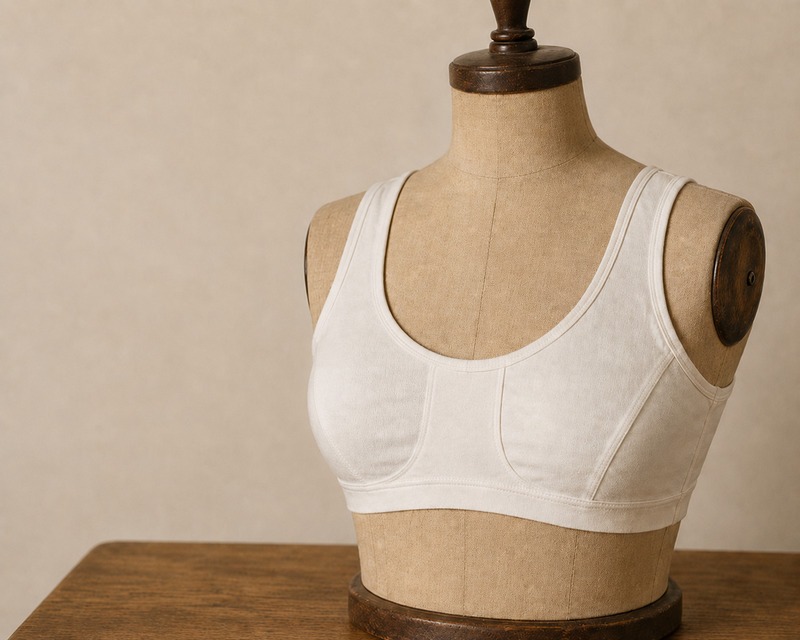
The popular image of feminists publicly burning bras at the 1968 Miss America protest is largely a myth. Protesters placed bras and other objects associated with restrictive beauty standards into a “Freedom Trash Can,” but reliable accounts indicate that no organized bra-burning took place.
Another major milestone came in 1977, when Lisa Lindahl, Polly Smith, and Hinda Miller created the Jogbra, widely credited as the first modern commercial sports bra. Their athletic brassiere design received a U.S. patent in 1979.
The 1980s and 1990s: Technology and Fashion.
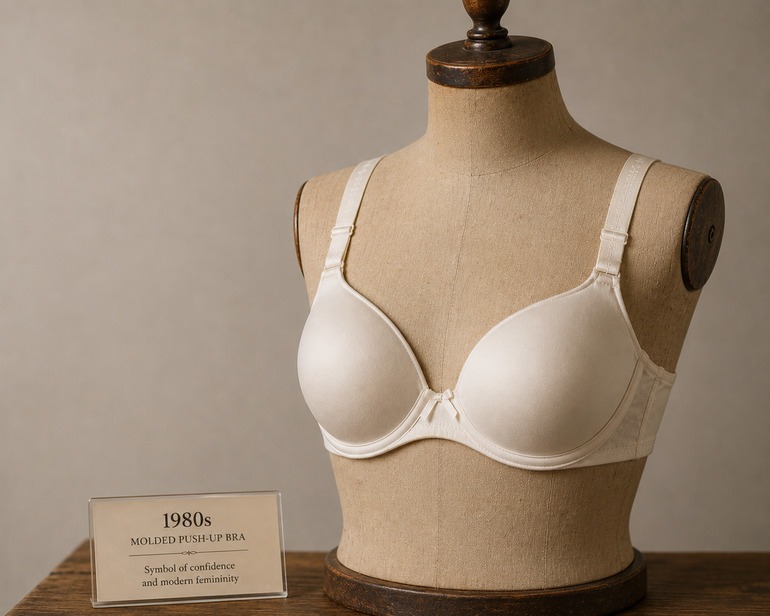
By the 1980s, manufacturers were making increasingly sophisticated use of stretch fibers, molded cups, underwires, and blended synthetic fabrics. Lycra itself had been developed in 1958 and began appearing in foundation garments during the early 1960s.
Push-up bras were not new, but the Wonderbra’s high-profile 1994 relaunch and advertising campaign helped make cleavage-enhancing designs one of the defining lingerie trends of the decade. The campaign also strengthened lingerie’s position as both a functional garment and a fashion statement.
The 2000s to Today: Comfort, Inclusivity, and Sustainability.
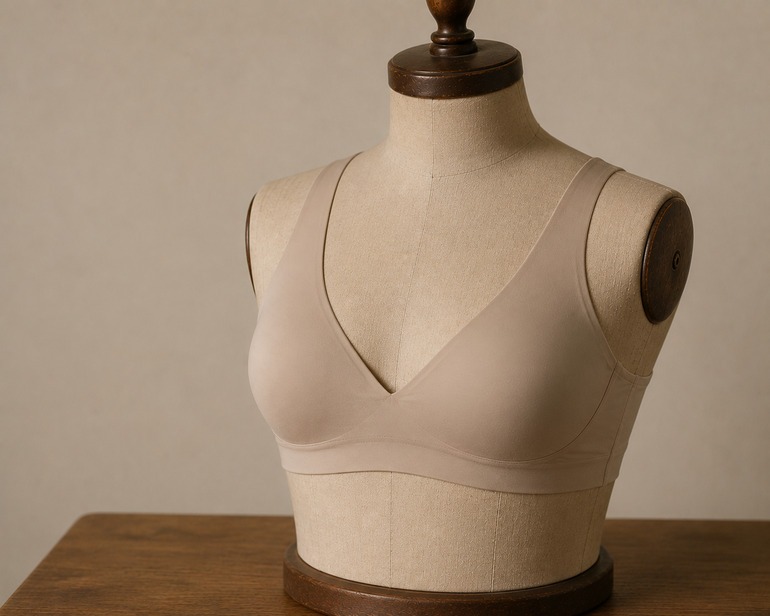
During the 2000s, consumers gained access to a wider and more specialized range of T-shirt bras, seamless molded bras, nursing and maternity designs, sports bras, and wireless styles.
By the 2010s, bralettes became increasingly popular as consumers prioritized comfort over rigid structure. Brands also began offering more inclusive sizing, recognizing the need to serve a broader range of body types.
Researchers and specialized manufacturers are also developing sensor-integrated bras capable of measuring metrics such as heart rate, movement, or temperature. Although promising, many medical and diagnostic applications remain experimental or require further clinical validation.
How Bra Materials Have Evolved.
Synthetic fibers significantly changed bra manufacturing by making garments lighter, more flexible, and easier to shape. Nylon reduced weight, spandex improved stretch and recovery, memory foam enhanced comfort, and moisture-wicking fabrics made sports bras significantly more effective during physical activity.
These textile innovations allow manufacturers to create bras tailored for sports, nursing, everyday wear, and specialized support.
The Bottom Line.
The bra has evolved through more than a century of changing fashion, textile innovation, and growing demand for better comfort and support. From early breast-support garments to sports bras, bralettes, adaptive designs, and sustainable materials, each development reflects changing lifestyles and needs.
Today’s bras offer greater variety in fit, function, and design, while innovation continues to improve comfort, performance, and inclusivity.
Image Attribution: All images in this article are AI-generated illustrations created for editorial purposes and are intended to visually represent the topics discussed.
Related Posts

Signs Your Bra Is Too Tight and Causing Skin Irritation
Bras are designed to provide support and comfort throughout the day. H

How to Measure Your Bra Size Accurately at Home
Finding the right bra size can make a big difference in your daily com
How to Find Lace Bras That Are Stylish, Supportive, and Comfortable
Many people are attracted to lace bras but do not wear them on a daily
Push-Up Bra Guide: How to Choose the Right Fit & Style
Getting ready for an outfit you love, but something still feels off? T

T-Shirt Bras Guide: Fit, Benefits & Everyday Comfort Tips
You put on your favorite top, and suddenly your bra lines show through
How Often Should You Replace a Bra? Signs It’s Time for a New One
Most women keep a bra far longer than they should. You love the fit, t
POST COMMENT