
Find Your Ideal Bra by Understanding Your Breast Shape
For many people, finding a bra that truly fits can feel frustrating. You might try multiple sizes, switch between styles, and still end up with straps digging in or cups that don’t sit right. The key point is this: bra fit is not determined by size alone, breast shape plays an equally important role.
Breast shape affects how a bra sits on your body, how it supports you, and how comfortable it feels throughout the day. When you understand your natural shape and how bras are designed, you can make smarter choices and avoid the trial-and-error process.
Let’s begin by looking at what breast shapes really mean and why they matter more than most people think.
What Are Breast Shapes and Why Do They Matter?
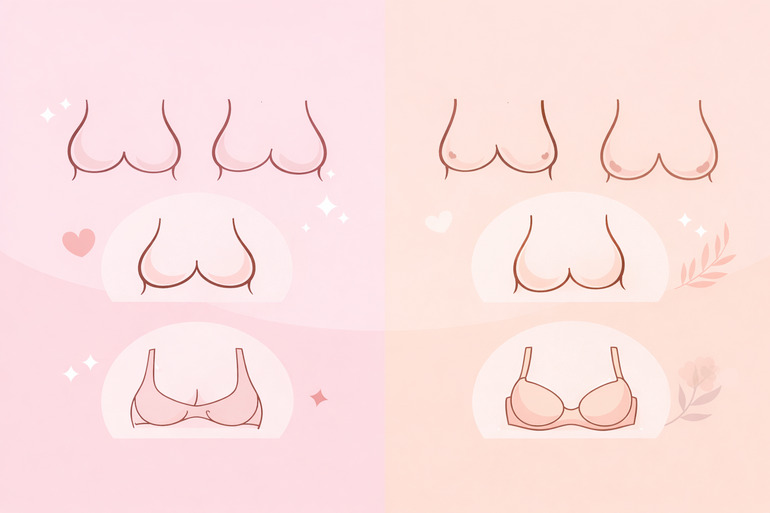
Breast shapes describe how your breast tissue is distributed across your chest. This includes where fullness sits (top, bottom, or sides), how far apart the breasts are, and how much they project outward.
Two people can wear the same bra size but have completely different shapes, and therefore, need different bra styles. This is why a bra that works perfectly for someone else might feel uncomfortable on you.
Understanding your shape helps you:
- Choose bras that support your natural structure
- Avoid common fit problems like gaping or spillage
- Improve overall comfort and posture
- Feel more confident in how your clothes fit
With that foundation in place, let’s explore the most common breast shapes in more detail.
Common Breast Shapes (Explained in Detail).
Breast shapes can vary widely from person to person, but most fall into a few common patterns based on fullness and positioning. Let’s take a closer look at the most common types and how they differ.
Round.
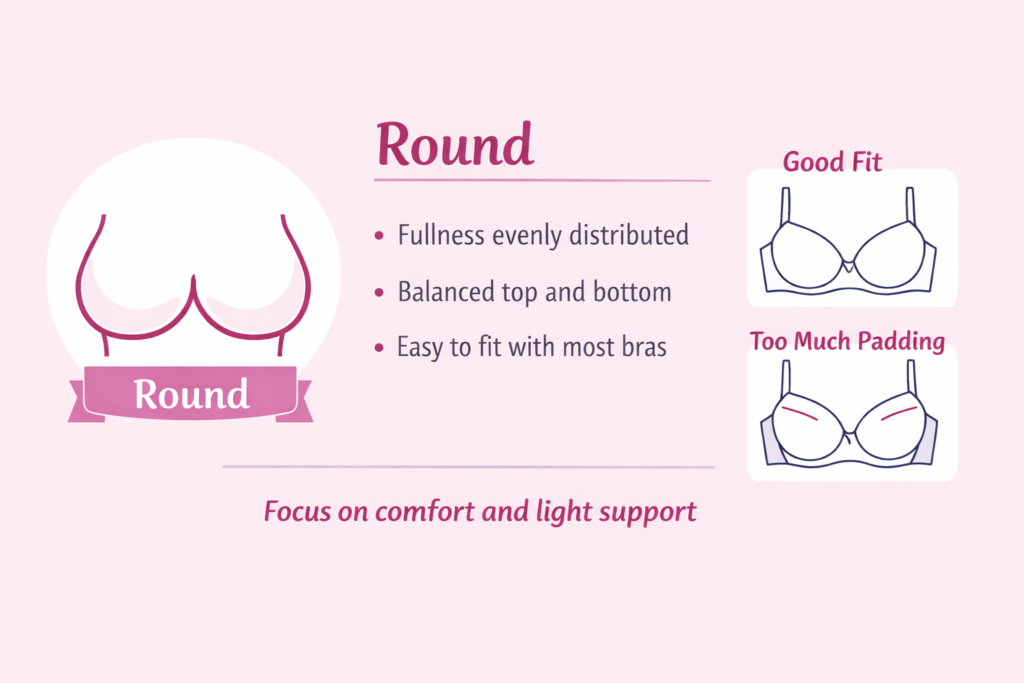
Round breasts have equal fullness on both the top and bottom. This balanced distribution makes them one of the easiest shapes to fit.
Because the volume is evenly spread, most bra styles sit naturally without needing extra lift or structure. However, that doesn’t mean every bra is ideal. Overly padded bras, for example, can create an unnatural look or feel too bulky.
Best approach: Focus on comfort and light support rather than reshaping.
Teardrop.
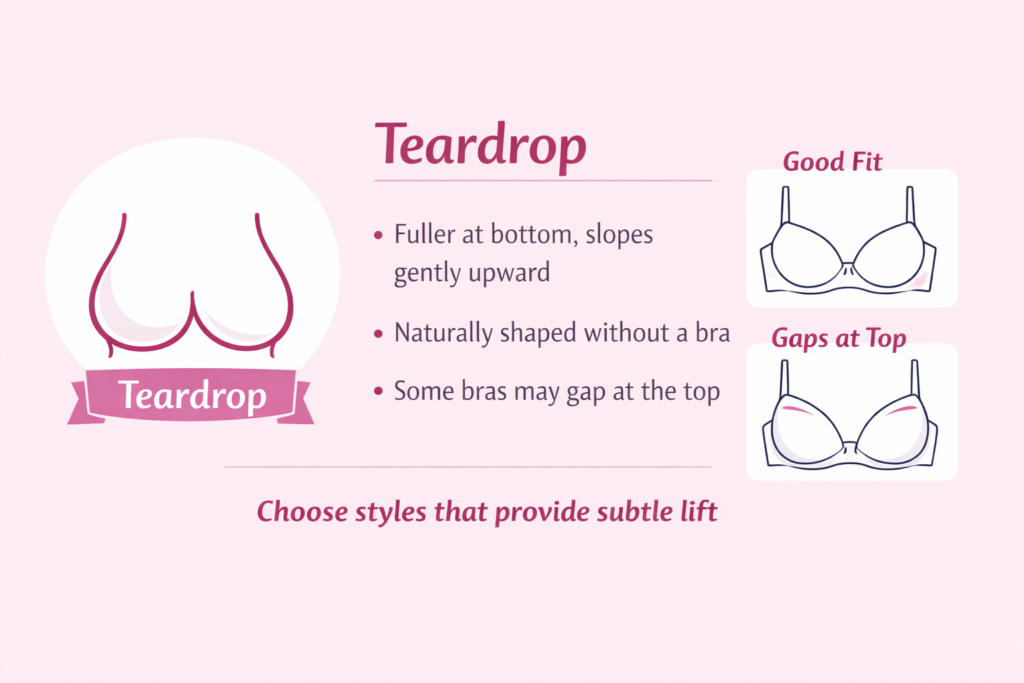
Teardrop-shaped breasts are fuller at the bottom and gently slope upward toward the top. This shape is very common and often looks natural even without a bra.
However, some bras may leave slight gaps at the top of the cup. This happens because the upper breast is less full.
Best approach: Choose styles that provide subtle lift, helping distribute fullness more evenly without over-padding.
East-West.
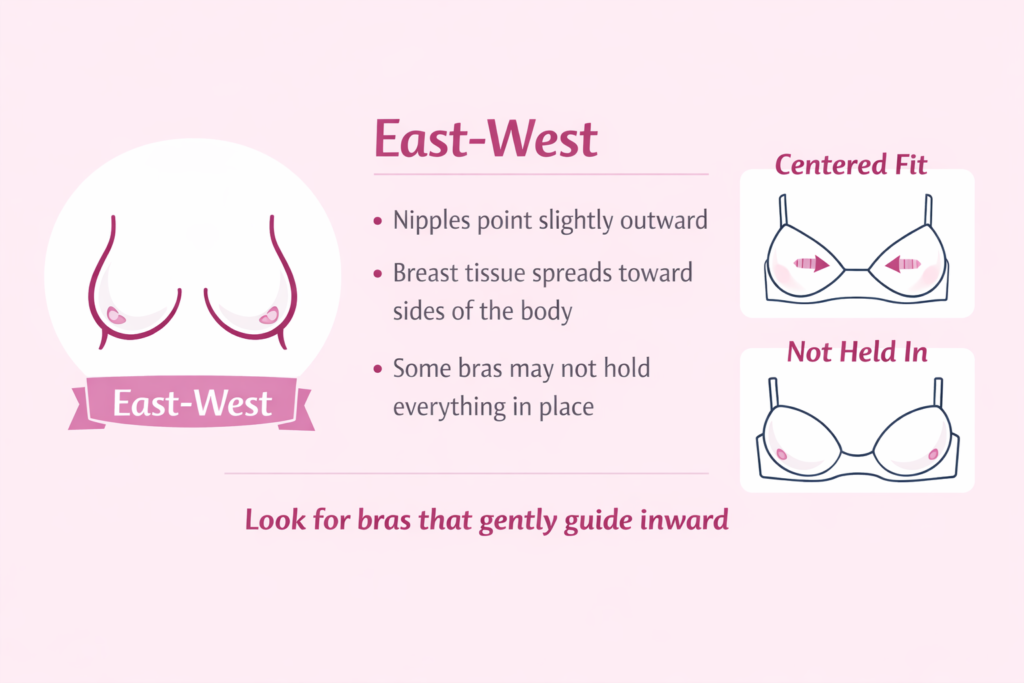
With east-west breasts, the nipples point slightly outward, and the breast tissue spreads toward the sides of the body.
This shape can make some bras feel like they are not holding everything in place, especially if the cups are too centered.
Best approach: Look for bras that gently guide the breasts inward, creating a more centered and supported feel.
Side Set.
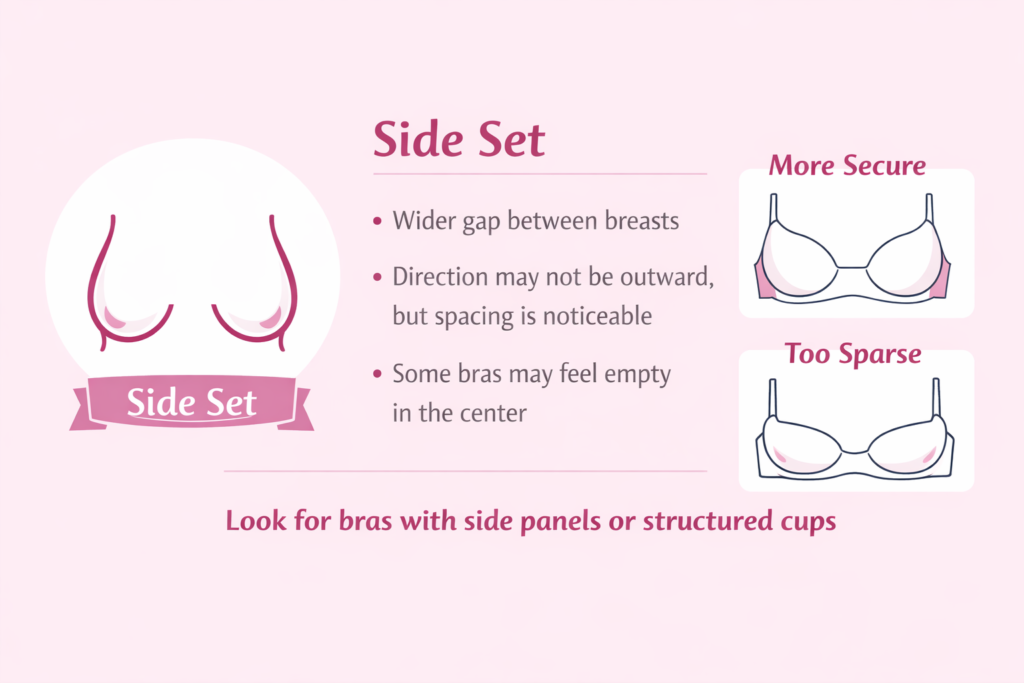
Side-set breasts have a wider gap between them. Unlike east-west shapes, the direction may not be outward, but the spacing is more noticeable.
Some bras may feel empty in the center or fail to provide enough support across the chest.
Best approach: Styles with side panels or structured cups can help bring the breasts into a more secure position.
Close Set.
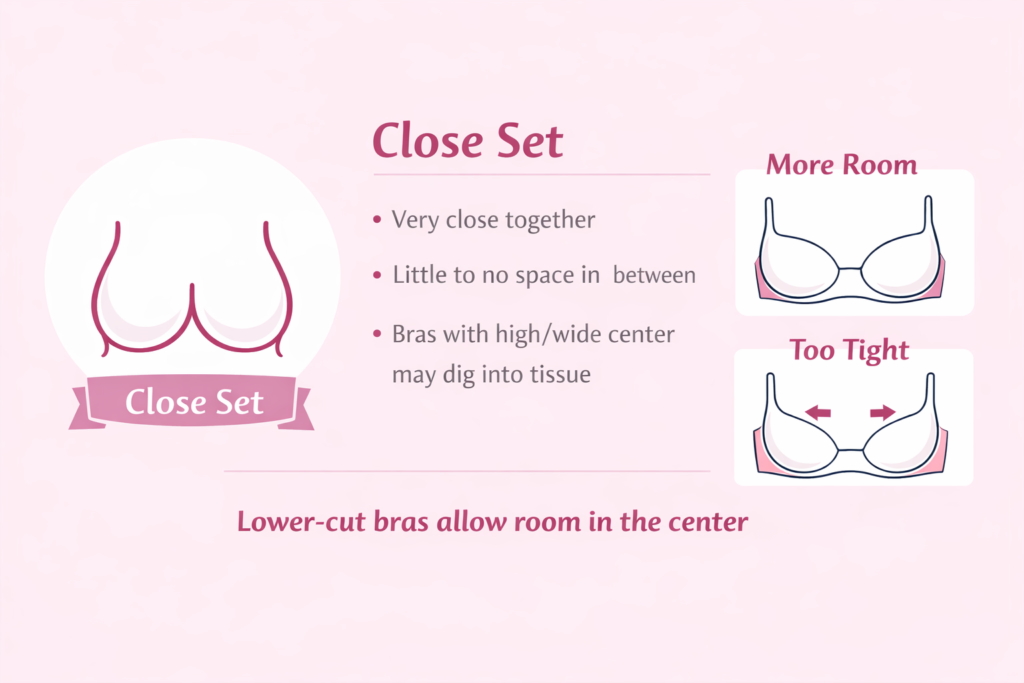
Close-set breasts sit very near each other, often with little to no space in between.
This can make certain bras uncomfortable, especially those with a high or wide center panel (gore), which may press into the breast tissue.
Best approach: Lower-cut bras allow more room in the center and prevent pressure or discomfort.
Asymmetric.
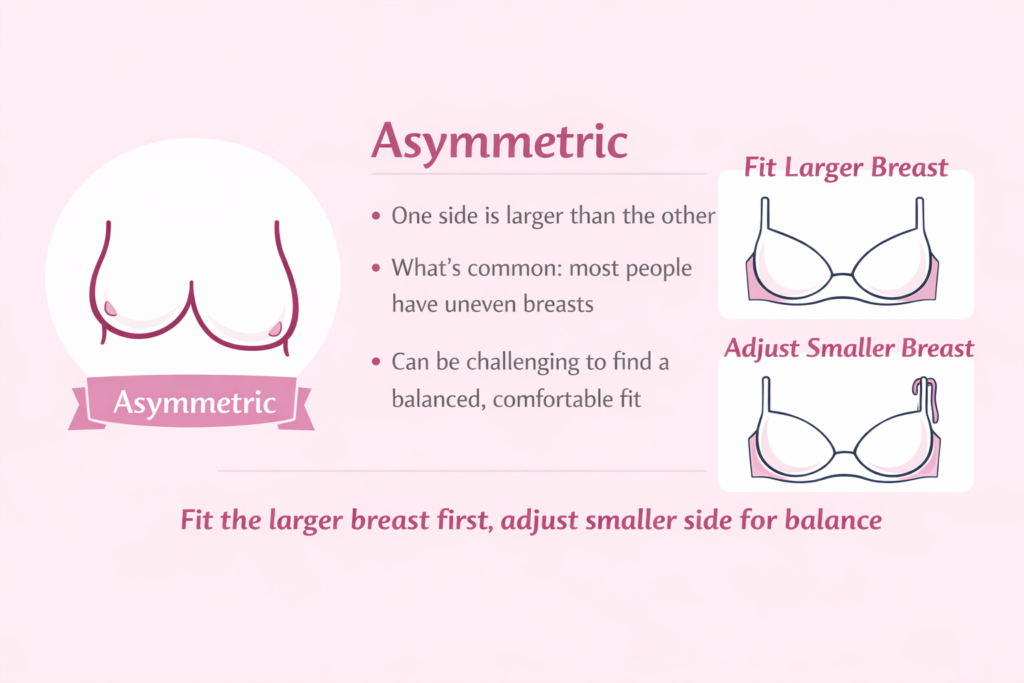
Breast asymmetry is extremely common. In fact, most people have one breast slightly larger than the other.
The challenge here is finding a bra that accommodates both sides without discomfort or visible imbalance.
Best approach: Always fit the larger breast first. Then adjust the smaller side using straps or padding for balance.
Athletic / Wide Root.
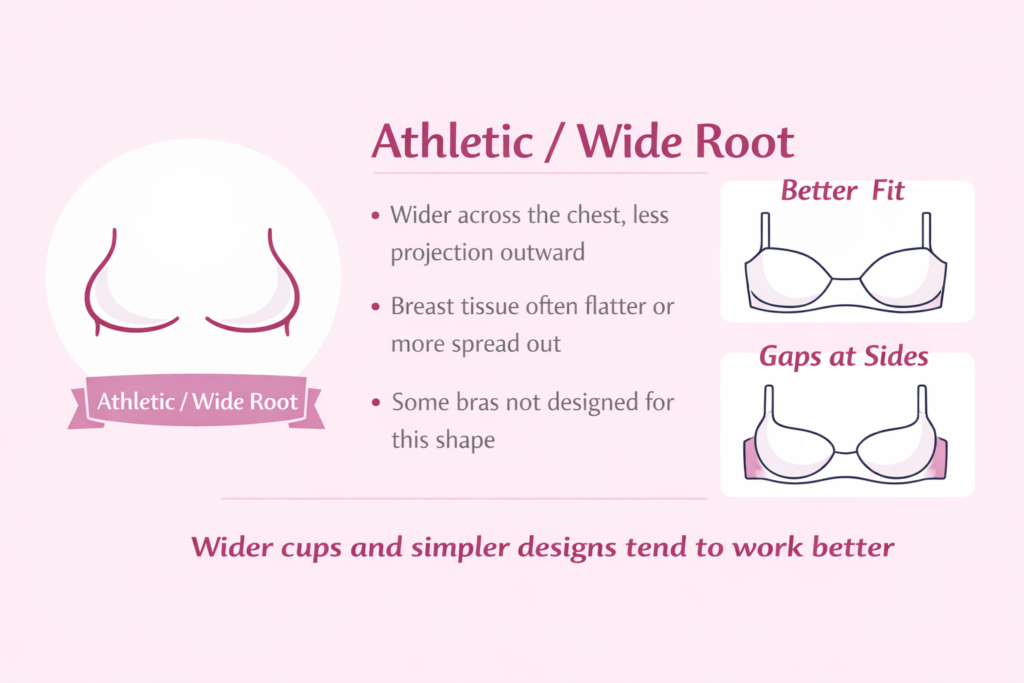
This shape is typically wider across the chest with less projection outward. The breast tissue may appear flatter or more spread out.
Many standard bras are designed for more projected shapes, which can lead to gaps or poor support.
Best approach: Wider cups and simpler designs tend to work better than heavily structured or padded options.
Bell Shape.
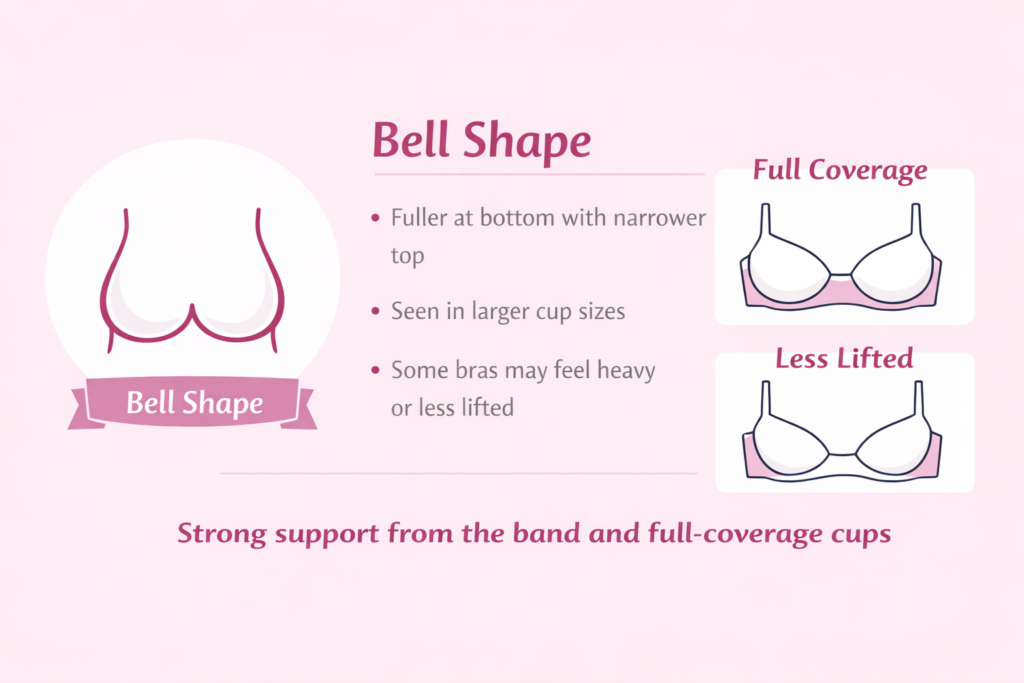
Bell-shaped breasts are fuller at the bottom with a narrower top, often seen in larger cup sizes.
Without proper support, this shape may feel heavy or less lifted.
Best approach: Strong support from the band and full-coverage cups helps distribute weight comfortably.
How Bra Fit Really Works.
A bra is a support system, and each part plays a specific role. When one part doesn’t fit properly, the entire bra can feel uncomfortable.
- The Band: This is the foundation. It should feel snug and stay level around your body. If the band rides up, it’s too loose.
- The Cups: They should hold all of your breast tissue securely, without leaving gaps or spilling over.
- The Straps: They help with positioning but should not carry most of the weight.
- The Gore: The center piece of the bra should sit flush against your chest to provide effective separation and stable support.
A well-fitting bra should feel secure, almost like a gentle hug. You should be able to move freely without constantly adjusting it.
Matching Breast Shapes to the Right Bra Styles.
Choosing the right bra should be about working with your natural shape.
For example, if your breasts are fuller at the bottom, a bra that lifts from below can create a more balanced feel. If your breasts are wider apart, a style that brings them inward can improve support.
Instead of forcing your body into a specific style, look for designs that:
- Support where you need it most
- Align with your natural shape
- Feel comfortable throughout the day
This shift in mindset, from “fixing” to “supporting”, makes a big difference in both comfort and confidence.
Tips for Everyday Comfort and Support.
A well-fitting bra should support you without being noticeable. Here are a few simple habits that can help:
- Rotate between multiple bras to maintain elasticity
- Wash gently to preserve shape and support
- Adjust straps regularly as they loosen over time
- Choose breathable materials for daily wear
- Replace bras when they no longer feel supportive
The Bottom Line.
Understanding breast shapes changes the way you approach bra shopping. Instead of guessing or settling for discomfort, you can choose styles that truly work for your body.
The goal is not to change your shape, but to support it in the best possible way. When your bra fits well, everything, from posture to confidence, improves naturally.
Take the time to learn what works for you. The right fit is not just about appearance, it’s about feeling comfortable and confident every day.
Related Posts
Bust Measurement vs Bra Measurement: Key Differences Explained (Fit Guide)
Finding the right fit starts with understanding your body, but when it
Small vs Large Bust Support Needs: Tips for Comfort and Proper Fit
Understanding how bust size affects support needs is important for com
How to Measure Your Bra Size Accurately at Home
Finding the right bra size can make a big difference in your daily com

Differences Between US, UK, EU, and Asian Bra Sizes: A Complete Guide
Have you ever excitedly clicked “buy” on a beautiful bra from an o
Understanding Band and Cup Sizes
Choosing the right bra size can feel confusing. Many people see number
10 Signs You’re Wearing the Wrong Bra Size (And How to Fix)
Finding the right bra size directly impacts your comfort, posture, and

POST COMMENT