
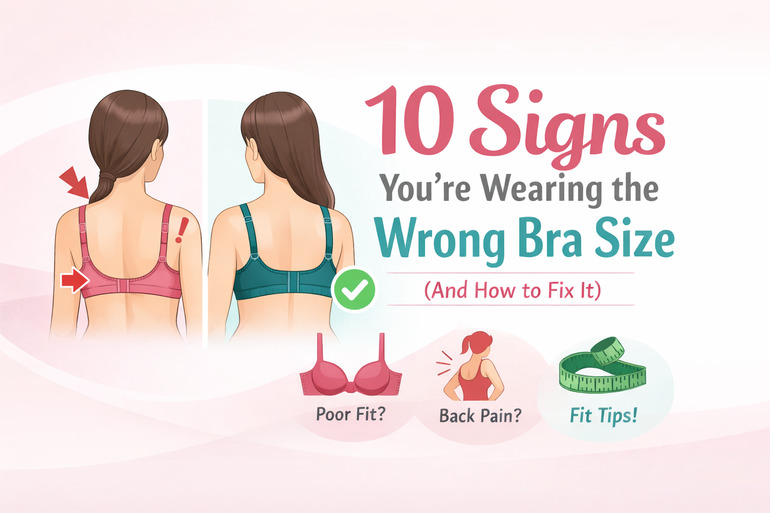
10 Signs You’re Wearing the Wrong Bra Size (And How to Fix)
Finding the right bra size directly impacts your comfort, posture, and daily confidence. Yet research from lingerie retailers and fitting specialists consistently shows that a significant percentage of women are wearing the wrong bra size without realizing it.
Because bra sizing varies across brands and bodies naturally change over time, it’s easy to fall into the habit of wearing a size that no longer fits properly. The result? Discomfort that feels “normal” but doesn’t have to be.
In this guide, we’ll walk you through the clear signs you’re wearing the wrong bra size, explain why proper fit matters, and provide a practical step-by-step method to help you find your ideal fit.
Why Wearing the Right Bra Size Matters.
Before diving into the signs, it’s important to understand why proper bra fit is so critical to avoid mistakes.
A well-fitted bra should:
- Support breast tissue without compressing it.
- Distribute weight evenly between the band and the straps.
- Sit flush against your ribcage.
- Enhance posture rather than strain it.
The majority of the support should come from the band, rather than the straps. When the band fits correctly, it stabilizes breast weight close to the body’s center of gravity. When it doesn’t, your shoulders and upper back compensate, often leading to discomfort.
In other words, bra fit is both a comfort issue and a structural one.
What Does “Wrong Bra Size” Actually Mean?
Many people assume wearing the wrong size simply means “too small.” In reality, it can mean several things:
- The band is too tight or too loose.
- The cups are too small or too large.
- The style doesn’t match your breast shape.
- You’re wearing the wrong “sister size”.
Bra sizing includes two components:
- Band size (number) – measurement around your ribcage.
- Cup size (letter) – difference between ribcage and bust measurement.
Even small miscalculations can change the entire fit and feel of a bra.
Now that we understand what improper sizing looks like structurally, let’s explore the most common physical signs.
10 Clear Signs You’re Wearing the Wrong Bra Size.
Each of the following indicators suggests a specific fit issue. If you recognize one or more of these, it may be time for a refit.
1. Your Band Rides Up in the Back.
If your bra band creeps upward during the day, it’s likely too loose.
The band should lie flat against the body, parallel to the floor, and fit snugly on the loosest hook. When it rides up, it shifts support away from your ribcage and onto your straps, reducing stability.
What to try: Time to go down one band size and adjust the cup accordingly (sister sizing).
2. Your Straps Dig Into Your Shoulders.
Straps should rest comfortably without leaving deep grooves.
If they’re digging in, it usually means the band isn’t providing enough support, forcing the straps to carry excess weight.
Remember: About 80% of support should come from the band, not the straps.
3. Your Straps Constantly Fall Down.
On the opposite end, slipping straps can signal:
- A band that’s too large
- Cups that don’t anchor properly
- A style mismatch for your shoulder shape
If tightening the straps doesn’t fix the issue, the problem likely lies elsewhere in the fit.
4. You Notice Cup Spillage (“Quad Boob”).
If breast tissue spills over the top or sides of your cups, the cup size is too small.
This is one of the clearest signs your bra doesn’t fit properly. The cups should fully encase your breast tissue without bulging.
5. There’s Gaping or Wrinkling in the Cups.
Gaps in the cup don’t always mean the cup is too large.
It may indicate:
- The style doesn’t suit your breast shape
- The band is too loose
- The cup size is incorrect
The fabric should lie smooth and flat against your tissue.
6. The Underwire Digs Into Breast Tissue.
Underwire should sit on your ribcage, not on soft breast tissue.
If it presses painfully against the sides or bottom of your breasts, your cup size is likely too small, or the wire shape is incorrect for your anatomy.
7. You Experience Neck, Shoulder, or Upper Back Pain.
Persistent tension in the upper body may signal improper support.
When breast weight isn’t distributed correctly, your trapezius and shoulder muscles compensate, often leading to soreness by the end of the day.
8. Your Bra Feels Restrictive or Hard to Breathe In.
If your band feels uncomfortably tight, even on the loosest hook, it’s likely too small.
A properly fitted band should feel firm but allow full, comfortable breathing.
9. You Notice Skin Irritation or Chafing.
Frequent redness, rashes, or friction marks may be caused by:
- A band that’s too tight
- Fabric rubbing due to poor fit
- Lack of breathability
Minor marks are normal. Deep indentation or irritation is not.
10. You Feel Immediate Relief When You Take It Off.
It’s normal to feel relaxed at the end of the day. However, if removing your bra brings instant, dramatic relief, discomfort has likely been building unnoticed.
A well-fitted bra should feel supportive, not restrictive.
How Often Should You Recheck Your Bra Size?
Your body changes more than you may think.
Experts recommend refitting:
- Every 6-12 months
- After weight changes
- During or after pregnancy
- Following hormonal shifts
- After surgery
Even minor fluctuations can alter how your bras fit.
Common Bra Sizing Myths.
# “I’ve always been this size.”
Body composition shifts over time.
# “Tighter means more supportive.”
Support should feel secure, not restrictive.
# “All brands fit the same.”
Sizing standards vary significantly between manufacturers.
The Bottom Line.
Wearing the wrong bra size is incredibly common, but it doesn’t have to be.
If you’ve noticed several of the signs above, consider remeasuring and trying multiple sizes and styles. The right bra should feel balanced and comfortable throughout the day.
At The Best Bras Guide, our goal is to help you make confident, informed decisions about fit, style, and comfort. Because when your foundation fits properly, everything else feels better too.
Related Posts
![Common Bra Fitting Mistakes Women Make [And How to Fix Them]](https://bestbrasguide.com/wp-content/uploads/2026/02/bra-fitting-mistakes.jpg)
Common Bra Fitting Mistakes Women Make [And How to Fix Them]
Proper bra fit influences posture, support, confidence, and everyday c

Differences Between US, UK, EU, and Asian Bra Sizes: A Complete Guide
Have you ever excitedly clicked “buy” on a beautiful bra from an o
Small vs Large Bust Support Needs: Tips for Comfort and Proper Fit
Understanding how bust size affects support needs is important for com
Understanding Band and Cup Sizes
Choosing the right bra size can feel confusing. Many people see number
What Is a Minimizer Bra and How Does It Work? (Complete Guide 2026)
For many individuals with a larger bust, standard bras may not always
How Often to Remeasure Bra Size for Best Fit & Comfort
A bra that once felt perfect can slowly become uncomfortable, and most

POST COMMENT