
![Common Bra Fitting Mistakes Women Make [And How to Fix Them]](https://bestbrasguide.com/wp-content/uploads/2026/02/bra-fitting-mistakes.jpg)
Common Bra Fitting Mistakes Women Make [And How to Fix Them]
Proper bra fit influences posture, support, confidence, and everyday comfort. Yet many women wear bras that don’t fit well, often without realizing the long-term impact on their bodies.
In this article, we’ll explore the most common bra fitting mistakes women make, how to tell if your bra fits properly, and expert-recommended solutions so you can feel comfortable and confident every day.
Key Takeaways
- Proper bra fit starts with the band
- Cups must fully contain without gaps or spillage
- Professional fittings are worth it
- Different styles suit different body types and activities
- Replace bras before they lose support
Why Bra Fit Matters.
According to certified bra fitters, most women are wearing the wrong size at some point in their lives, largely because sizes vary by brand and bodies change over time.
A bra that fits well does more than look nice. It supports the body in ways that can:
- Improve posture
- Reduce back, shoulder, and neck discomfort
- Prevent skin irritation and digging straps
- Enhance confidence and comfort during movement
How to Know If a Bra Fits Properly.
Before we look at mistakes, here’s how you should know if your bra fits well:
- The band is snug around the rib cage, level all the way around
- The cups fully contain the breasts without bulging or wrinkling
- Underwire lies flat against your chest without poking
- Straps stay in place without digging into the shoulders
- You feel supported, not tight or restricted
If these aren’t happening, it’s likely your bra doesn’t fit correctly.
Common Bra Fitting Mistakes Women Make.
It’s important to understand that bra fitting mistakes are incredibly common and often made without realizing it. Small fit issues can add up over time, affecting comfort, support, and even confidence.
The following sections break down the most common bra fitting mistakes women make and how to correct them for a better, more supportive fit.
1. Wearing the Wrong Band Size.
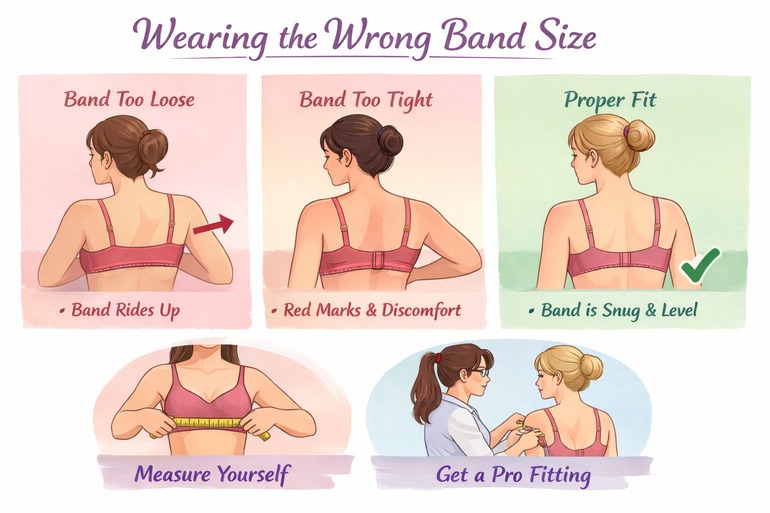
Problem: The band is the foundation of bra support. If it’s too loose, the bra rides up; if too tight, it can dig into your ribs.
Signs:
- Band rides up the back
- You tighten the straps to compensate
- Red marks that don’t fade
Fix: Measure yourself or get a professional fitting. The band should fit snugly on the loosest hook so you can tighten it later as it stretches with wear.
2. Incorrect Cup Size (Too Small or Too Large).
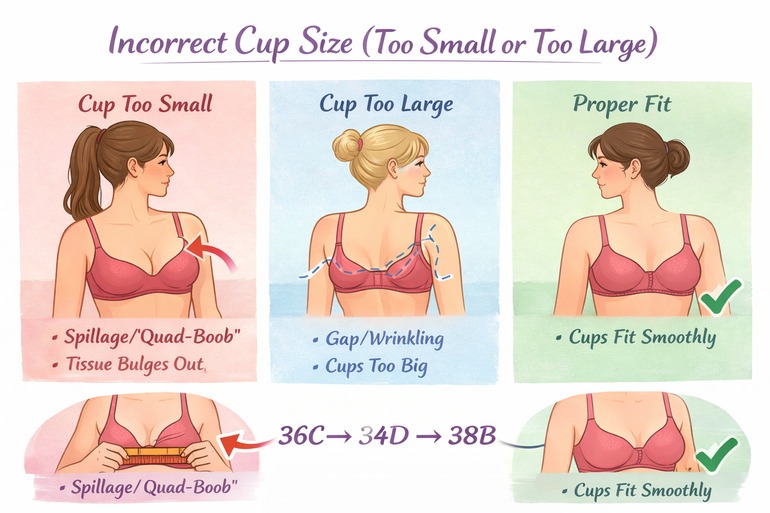
Problem: Cup size changes with body weight, hormonal shifts, and age. Many women wear cups that are too small (causing spillage) or too large (gaps in fabric).
Signs:
- Spillage or “quad-boob”
- Wrinkling or gaping in the cup
- Breast tissue bulges at the sides or under the arms
Fix: Try sister sizes. If one size doesn’t work, adjust the band and cup size accordingly. For example, 36C → 34D or 38B to find a better fit.
3. Not Getting Professionally Measured.
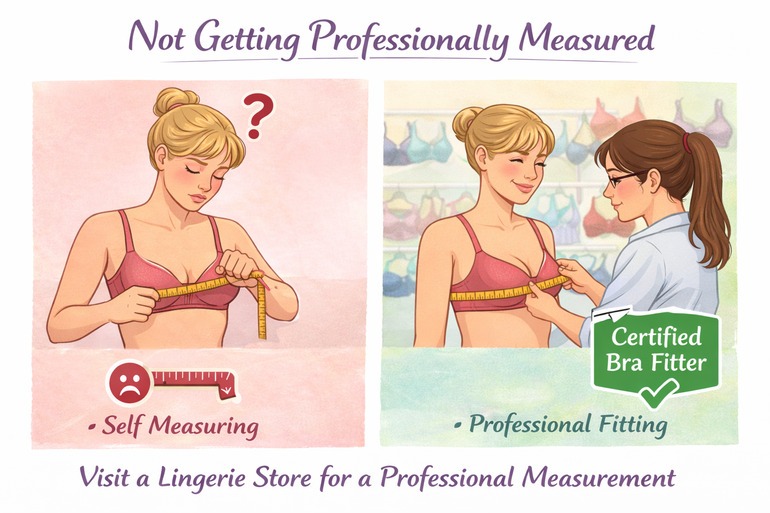
Problem: Self-measuring can be inaccurate, especially if you’re guessing sizes based on what you think you wear.
Expert Insight:
Certified bra fitters use precise measurements for both rib cage and bust, helping you find a size you actually fit into, versus what label you expect.
Fix: Visit a lingerie store for a professional measurement at least every 6-12 months, especially with body changes.
4. Ignoring Bra Style and Body Type.
Problem: Not every bra style suits every shape or activity.
Examples:
- A balconette might not support very full breasts
- A plunge might not fully contain larger sizes
Fix: Match bra style to purpose and body shape:
- Full-coverage for everyday support
- Sports bras for movement
- Plunge for low necklines
An expert fitter can recommend cuts that work best for your shape.
5. Wearing Bras That Are Too Old or Stretched Out.
Problem: Over time, elastic loses stretch and the underwire shifts.
Signs:
- Loss of support
- Band riding up
- Straps dig in more than usual
Fix: Replace bras every 6-12 months, depending on frequency of wear. A simple rule: if the band can stretch three fingers under tension, it’s time for a new one.
6. Relying on Straps Instead of the Band.
Problem: Straps are meant to fine-tune support, not carry the bulk of it, that role belongs to the band.
Signs:
- Straps leaving red marks
- Shoulder tension or sore neck
Fix: Tighten straps enough to keep them from slipping. Don’t use them to lift breasts. If the band is loose, adjust the band size first.
7. Assuming Sizes Are Universal Across Brands.
Problem: Sizes aren’t standardized: a 34C in one brand may fit differently in another.
Fix: Always try bras on, even if it’s “your size.” If buying online, check brand sizing guides and return policies.
Frequently Asked Questions (FAQ).
Still have questions? These are some of the most common concerns women have about bra fit.
How often should I get fitted?
-At least once a year or after weight changes, pregnancy, or exercise routine changes.
Should a bra band ride up?
-No, a properly fitted band should be level all around your body.
Can a bra fit affect posture?
-Yes. A supportive bra helps align the shoulders and spine, reducing strain.
Related Posts
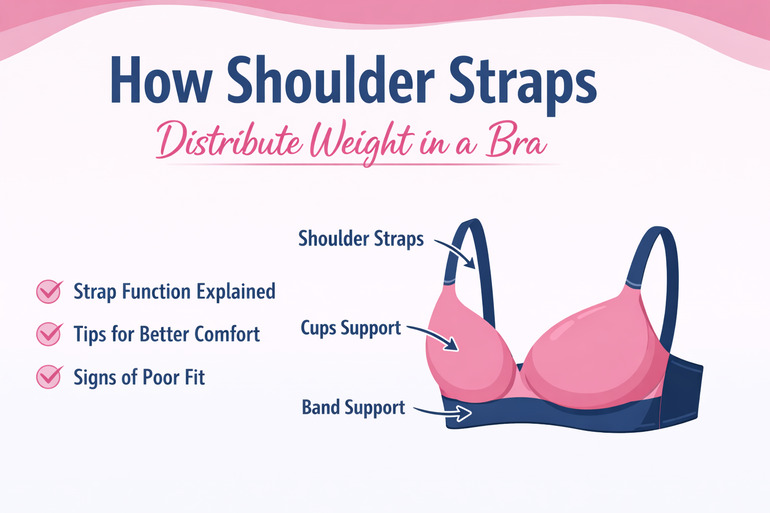
How Shoulder Straps Distribute Weight (And Why Your Bra Hurts)
Shoulder straps play an important role in how a bra feels throughout t
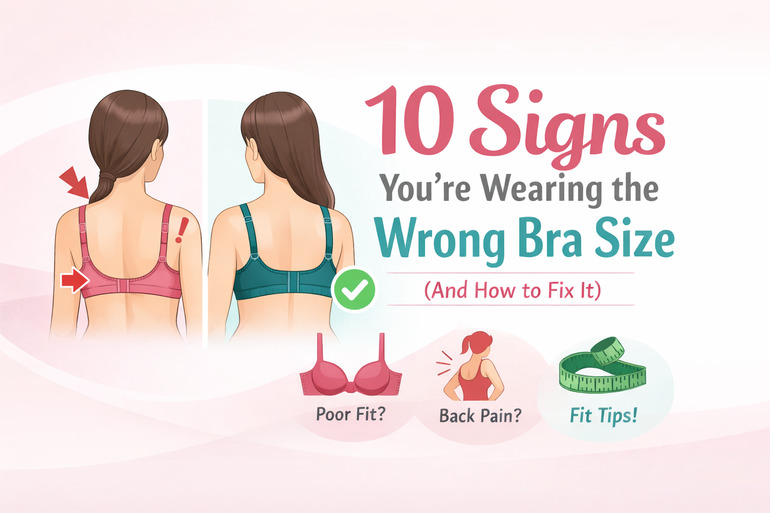
10 Signs You’re Wearing the Wrong Bra Size (And How to Fix)
Finding the right bra size directly impacts your comfort, posture, and

POST COMMENT