
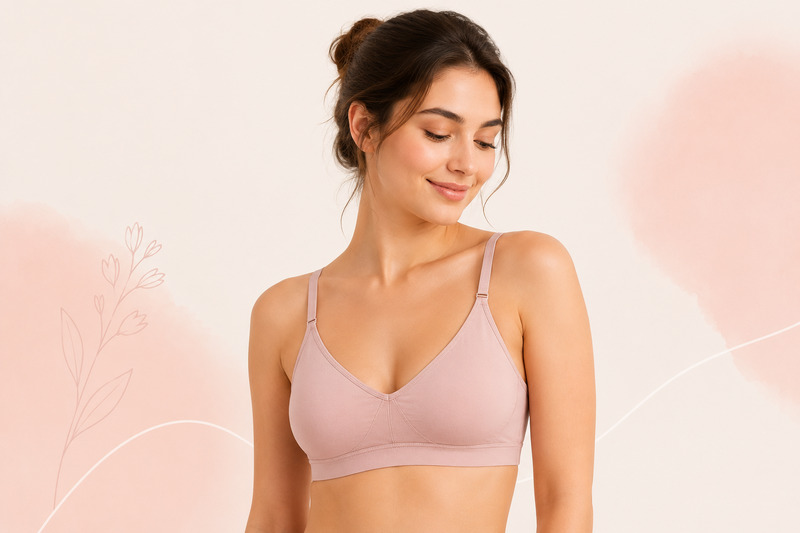
Bralettes: Comfort vs Support Explained for Everyday Wear
A bralette is a soft, lightweight bra that typically has no underwire and less structured cups than a traditional bra. Designed to move naturally with the body, bralettes generally prioritize flexibility and comfort over pronounced lift or movement control.
That does not mean every bralette provides minimal support. The amount of support depends on its construction, including the width and firmness of the underband, the strength of the fabric, cup coverage, strap design, and overall fit.
Bust size, personal comfort, and intended use also matter. Someone may find a bralette sufficiently supportive for desk work or casual outings but prefer a structured bra for a long day and a properly fitted sports bra for exercise.
This guide explains how bralette comfort and support differ, which design features improve stability, and how to choose a style that suits your body and daily routine.
Comfort and Support: What Is the Difference?
Many shoppers use the words comfort and support interchangeably, but they’re actually very different.
Comfort refers to how a bra feels while you’re wearing it. A comfortable bra shouldn’t pinch, dig into your shoulders, or leave painful marks.
Support, on the other hand, refers to how well the bra controls breast movement and distributes weight throughout the day.
According to Breast Research Australia, excessive breast movement during physical activity is one of the main causes of breast discomfort. Proper breast support helps reduce that movement, which is why sports bras are recommended for exercise rather than soft bralettes.
Why Bralettes Feel Comfortable?
The biggest reason people love bralettes is their simple construction.
Unlike traditional bras, most bralettes don’t use underwires or heavily molded cups. Instead, they rely on soft fabrics and flexible materials that move naturally with your body.
According to Harvard Health Publishing, many bra-related complaints stem from poor fit rather than the bra itself. Softer designs with fewer rigid components may feel more comfortable for people who spend long hours sitting, working from home, or simply prefer a less restrictive fit.
For many women, wearing a bralette feels less like wearing lingerie and more like wearing a soft layer of clothing.
Do Bralettes Provide Enough Support?
Yes, but not every bralette provides the same level of support.
One of the biggest misconceptions is that all bralettes are identical. In reality, support varies significantly depending on the design.
A supportive bralette typically includes:
- A wide, firm underband
- Adjustable shoulder straps
- Double-layered or reinforced fabric
- Full-coverage cups
- High-quality elastic that maintains its shape
These features help distribute weight more evenly than delicate lace triangle bralettes, which are primarily designed for comfort.
Bras are intended to improve comfort and reduce breast movement, not permanently change breast shape. A well-designed bralette may certainly provide everyday support, but it generally won’t match the lift and stability of a structured bra during long or highly active days.
Who Should Choose a Bralette?
A bralette can be an excellent everyday option if your routine involves relatively low-impact activities.
Many people prefer bralettes for:
- Working from home
- Office or desk jobs
- Casual outings
- Travel
- Relaxing at home
- Sleeping (if they prefer light support)
If your day involves frequent walking, standing for long periods, lifting, or exercise, a structured bra, or better yet, a sports bra, is usually a more supportive choice.
Does Bust Size Matter?
Yes, but it’s only one part of the equation.
People with smaller busts often find that a bralette provides all the support they need for daily wear.
For fuller busts, support becomes more dependent on the bralette’s construction than its label. Many brands now make full-bust bralettes with wider bands, stronger fabrics, and reinforced panels that offer significantly better stability than fashion-focused lace styles.
A well-designed full-bust bralette may feel more supportive than a poorly fitted traditional bra.
Signs Your Bralette Isn’t Supportive Enough.
Comfort shouldn’t come at the expense of proper fit.
You may need more support if you notice:
- The back band rides upward.
- Your breasts bounce excessively while walking.
- Shoulder straps constantly slip or dig in.
- You keep adjusting the cups throughout the day.
- You develop neck, shoulder, or upper-back discomfort after several hours.
These signs don’t necessarily mean bralettes aren’t right for you, they may simply indicate it’s time to choose a more supportive design or a different size.
Bralette vs Traditional Bra.
| Feature | Bralette | Traditional bra |
| Typical construction | Soft, flexible and usually wireless | More structured, sometimes with underwire |
| Primary benefit | Comfort and natural movement | Support, shaping, and lift |
| Everyday support | Light to moderate, depending on design | Moderate to high, depending on design |
| Cup structure | Usually unlined or lightly lined | Often molded, seamed, or reinforced |
| Best suited for | Lounging, desk work, and casual wear | Longer days, tailored clothing, and greater support needs |
| Exercise | Generally unsuitable unless designed as activewear | A dedicated sports bra is preferable |
The Bottom Line.
The debate over bralette comfort vs support isn’t about choosing a winner, it’s about choosing the right tool for the right situation.
A bralette excels at providing softness, flexibility, and all-day comfort, making it ideal for relaxed routines and low-impact activities. Traditional bras remain the better choice when you want greater lift, more stability, or extra support during long or active days.
Rather than asking whether a bralette is “better,” ask whether it’s better for your lifestyle. The best bra is the one that keeps you comfortable, supported, and confident throughout your day.
FAQs.
A bralette is generally softer, less structured, and usually wire-free. A traditional bra more commonly uses molded cups, reinforced panels, underwire, or other structural features to provide lift and shaping.
Yes, provided it fits comfortably and offers enough support for your activities and personal preferences.
They can be. Look for a firm, wide underband, adjustable straps, fuller cup coverage, reinforced fabric, and sizing designed specifically for fuller busts.
A standard fashion bralette is generally not designed to control movement during exercise. An activity-specific sports bra is the more appropriate choice for workouts.
There is no good evidence that choosing to wear, or not wear, a bra determines whether breasts sag or permanently changes their shape.
Related Posts
The Role of Elastane in Bras: Why Stretch Matters for Fit and Support
Most people judge a bra by its design, padding, or brand, but rarely b
Breast Density & Bra Support: How Tissue Type Affects Fit and Comfort
Breast support is not just about size, it’s also about tissue type.
Wireless vs Underwire Bras: Which One Feels Better?
Ever reached the end of the day and felt like your bra is the first th
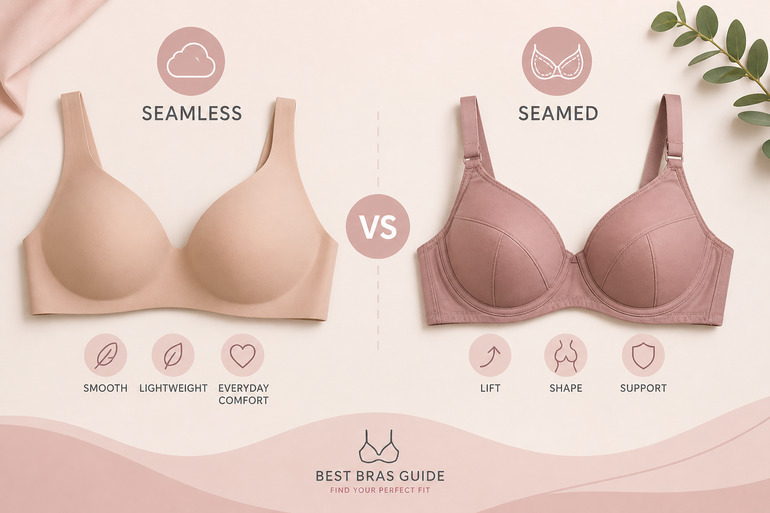
Seamless vs Seamed Bras: Which Style Offers Better Comfort and Shape?
Most women don’t realize this, but the reason a bra feels “off”
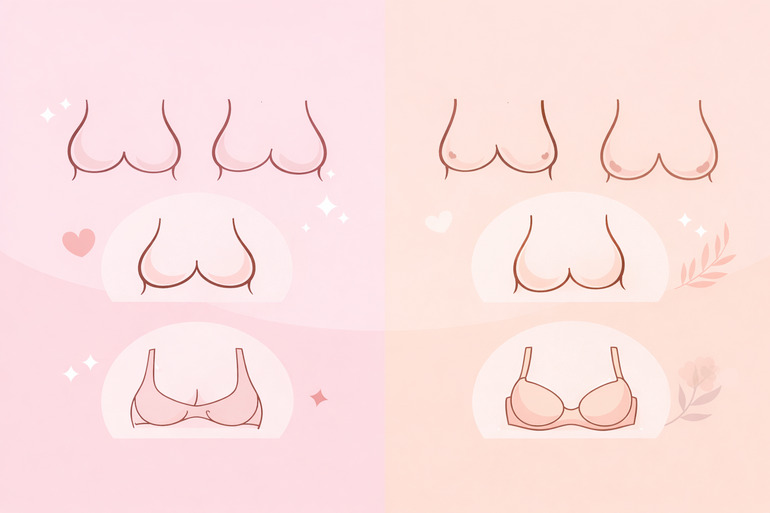
Find Your Ideal Bra by Understanding Your Breast Shape
For many people, finding a bra that truly fits can feel frustrating. Y
The Psychology of Bra Confidence: Why It Really Matters
You put on a bra every morning without thinking twice. It feels like t
POST COMMENT